
The problem chefs of industry face
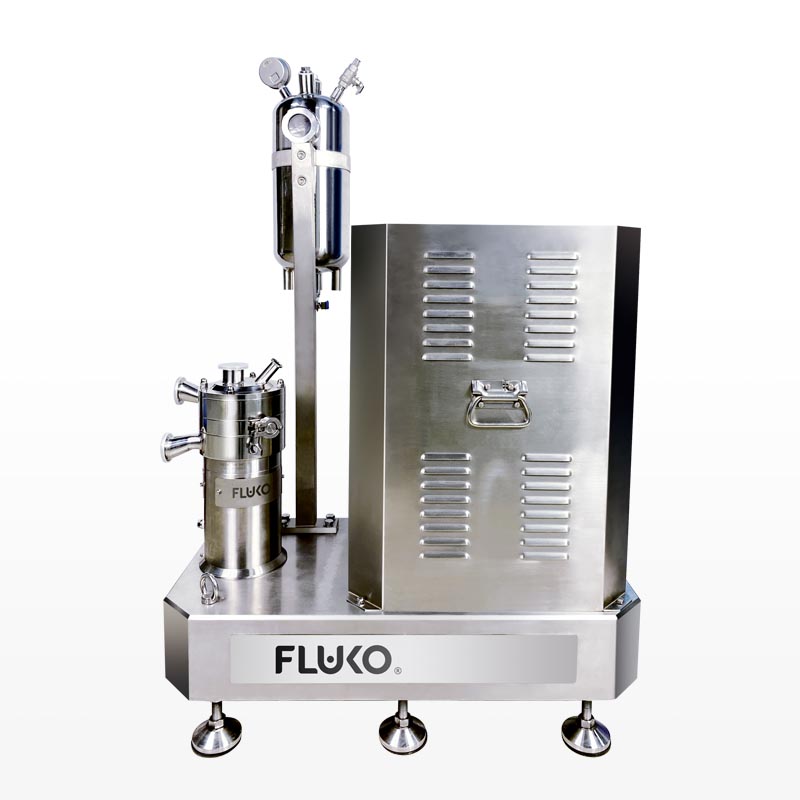
Think of a sauce that breaks at the last minute: fat separated, texture gone, flavor lost. Manufacturers face that same failure at scale — unstable emulsions, inconsistent batch-to-batch particle size, overheating during shear, and contamination risks that ruin product runs. I treat these problems like a failing recipe: first pick the right tool. For many processors that tool is an inline high shear mixer, but deciding when and how to use it is the work of technique, not marketing.

Diagnose: what’s actually going wrong
Too-large droplets, gritty mouthfeel, phase separation after a week — those are symptoms. Root causes are predictable: insufficient shear or shear at the wrong point in the process, incorrect viscosity during dispersion, air entrainment, or thermal spikes that denature proteins or destabilize polymers. I look at three numbers first: target droplet diameter, viscosity at processing temperature, and residence time. Miss any of those and the emulsion will fail regardless of the mixer brand.
Recipe for a robust emulsion
Start cold when proteins are involved. Normalize viscosity with pre-dispersion: dry powders or concentrates should be wetted and hydrated before high-shear. Meter the oil and aqueous phases so ratios are steady. Set rotor speed to achieve the target tip speed rather than chasing RPMs; tip speed correlates directly with droplet breakup. Keep residence time short but sufficient — too long creates heat. Use a controlled feed and recirculation to smooth out inconsistencies. Tight seals and sanitary design prevent contamination. Taste, test particle-size distribution (D[4,3] or D[3,2]) and adjust: change shear energy first, then flow-path geometry, then formulation. Small tweak to shear profile often fixes big sensory defects.
Common pitfalls and how to avoid them
Over-shearing: it destroys structure and raises temperature. Under-shearing: results in unstable droplets. Feeding solids straight into high shear: expect clumps. Assuming lab parameters scale linearly: they don’t. Cleaning-in-place (CIP) plans designed for mixers with dead zones fail in true inline units; pick equipment with smooth flow paths. Validate CIP cycles by conductivity or protein residue tests. Don’t skip rheological checks at process temperature — viscosity measured at room temperature often misleads decisions.
When another tool is the better cutlery
Rotor-stator units excel for coarse dispersions and rapid startup. Ultrasonic systems work for nanodispersions at small scale, but they’re finicky and heat-generating. Colloid mills give very fine cuts but demand higher maintenance for abrasive slurries. Choose by particle-size target, throughput, and maintenance tolerance. If you need submicron droplets at high throughput, an inline high-shear approach usually beats batch rotor-stator in consistency and space usage. If maintenance downtime is the enemy, favor designs with easy access to wear parts and documented mean time between maintenance.
Experience, evidence and one real-world anchor
I’ve run pilot lines and adjusted recipes on tight schedules. Peer-reviewed papers correlate droplet size distribution with shear rate and residence time; industrial tests mirror those findings. At ACHEMA in Frankfurt manufacturers demoed an inline high shear homogenizer that highlights the practical limits of tip-speed-driven design versus residence-time tuning. That demonstration reflects reproducible engineering: control shear energy, control particle size, control product stability. Use validated test methods (laser diffraction, rheometry, thermal profiling) to prove changes, not anecdote.
Final plate: what manufacturers deliver
Manufacturers translate lab technique into machine design: reliable seals, predictable shear fields, and sanitary serviceability. They supply documentation for scale factors and help set control strategies that prevent the sauce from separating in the walk-in cooler. Done right, the result tastes like craft — consistent texture, stable shelf life, clean processing. That practical, technical value is precisely what FLUKO brings to the production line.