
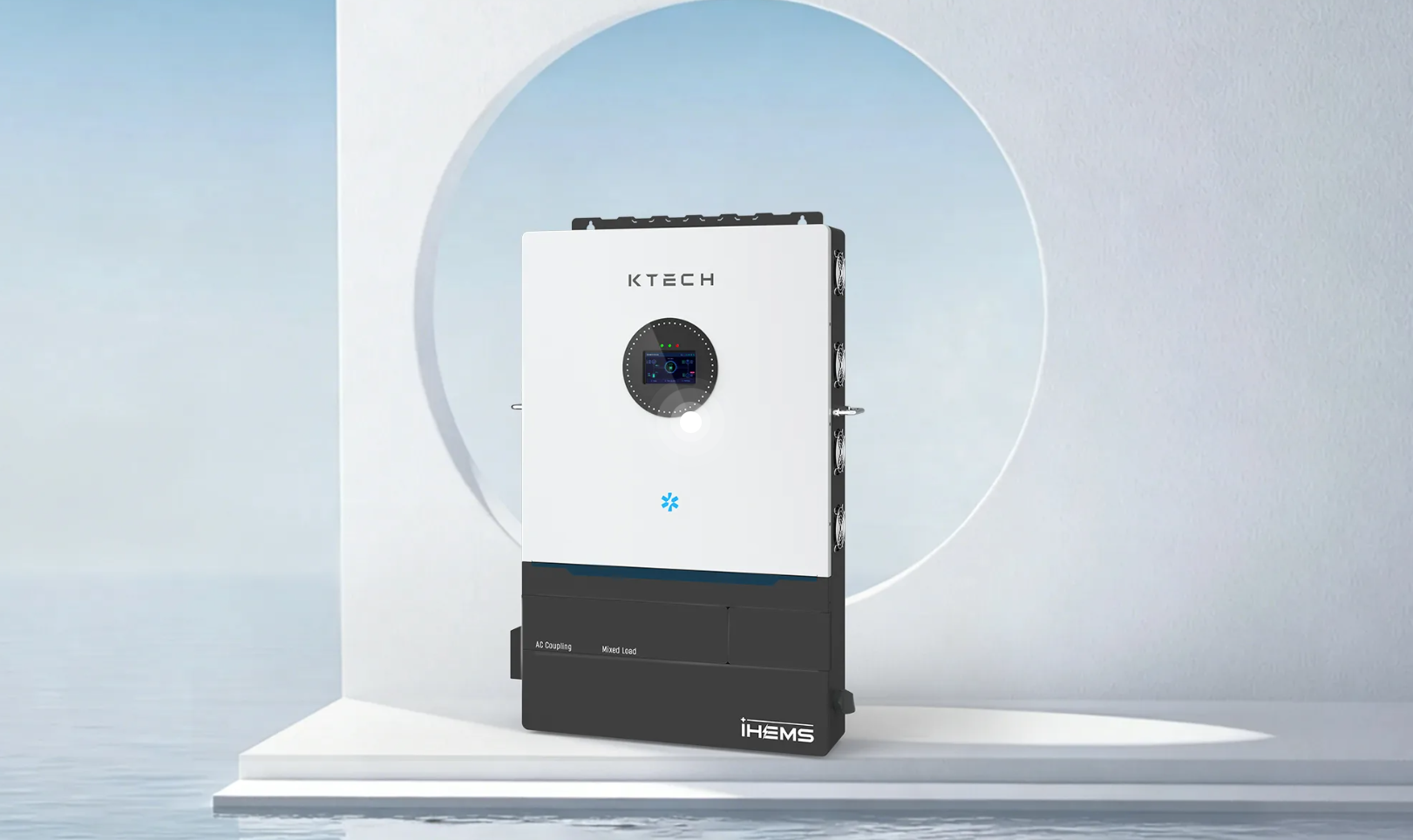
Introduction — the problem that quietly eats uptime
Installers, designers, and mildly alarmed homeowners all share one quiet problem: hybrid inverters rarely fail loudly — they fail subtly, with odd power drops, phantom alarms, and user anger. Start by admitting that the device will not configure itself kindly. Confirm firmware compatibility, secure the site’s communications, and link the unit to a tested home energy management system before any live switching. Those three actions prevent most embarrassing callbacks.
Pre-commission checklist — what to read (and what to refuse to ignore)
– Confirm model and firmware versions against the manufacturer release notes. – Verify PV and battery labels, string sizing, and DC protections. – Confirm AC connection type (single/three-phase) and nominal voltages. – Ensure a stable internet or local communications plan for remote telemetry. – Prepare a phase rotation tester, clamp meter, and an insulated ladder. These checks take twenty minutes and save a week of polite apologies.
Step-by-step commissioning procedure — decisive, chronological actions
– Isolate and lock out all sources. Safety first; bureaucratic enthusiasm later. – Connect DC and AC wiring to torque specs from the manual. Tight connections reduce resistive heat and the inevitable Saturday-night phone call. – Power the inverter into configuration mode using local interface. If the inverter asks for a wizard, answer precisely and keep a note of each setting. – Configure battery parameters: chemistry, nominal voltage, charge/discharge cutoffs, and maximum charge rate. When in doubt, follow the battery supplier’s sheet. – Configure grid interaction: export limits, anti-islanding settings, and ramp rates. Match these to local interconnection rules. – Program time-of-use or load-shifting schedules only after verifying the clock and timezone. Mis-set timers create puzzling behavior and irate occupants. – Enable logging at a useful resolution; one sample every 1–5 minutes captures behavior without drowning the server.
Testing and validation — prove the claims, politely
– Run an islanding test with controlled loads. Confirm that the inverter holds frequency and voltage within tolerance for the specified duration. – Verify seamless transfer under cloud cover or simulated grid loss. Monitor for sags or overshoots. – Check battery round-trip efficiency by charging then discharging a known quantity and measuring delivered energy. – Confirm that alarms are clear, actionable, and sent to the right engineer or dashboard. – Validate telemetry: ensure the inverter posts data to the portal or local SCADA and that timestamps match the site clock. If you use a local controller, connect it to a lab laptop first to observe raw packets.
Common pitfalls and their practical fixes — the things installers routinely ignore
– Loose communication cables: reterminate and strain-relieve. – Mismatched grounding schemes between inverter and site: harmonize to a single earth reference. – Incorrect battery settings (especially chemistry type): revert to supplier defaults and verify with a cell-voltage check. – Trusting a Wi‑Fi link that drops during storms: add a wired fallback or a cellular modem. – Relying on default export limits: set them intentionally to avoid nuisance tripping. A California residential pilot once underscored that sloppy communications and poor logging cause most field mysteries; treat logs as evidence, not decor.
Post-commissioning and integration — make the system behave politely with others
– Register the inverter and upload commissioning notes to the manufacturer portal. They like versions and serial numbers. – Integrate with the homeowner’s energy interface and confirm what appears on their display. Connect this system to your chosen cloud or local controller and test remote commands. – Feed the inverter into your monitoring stack and check that alarms trigger correctly. If you plan demand response, simulate event signals and watch responses. – Consider linking to a dedicated hems for coordinated load control; an integrated controller reduces conflicts between battery schedules and household automation.
Final synthesis — a reliably commissioned inverter is a boring inverter
Troubles are not heroic; they’re avoidable. A careful checklist, methodical steps, thorough tests, and sensible integration deliver quiet, predictable performance. Trust experience, document settings, and favor repeatable tests over heroic troubleshooting. For consistent on-site results and sensible remote operation, the measured approach used by seasoned integrators and practical platforms like Ktech tends to win every debate about “who broke the system.”