
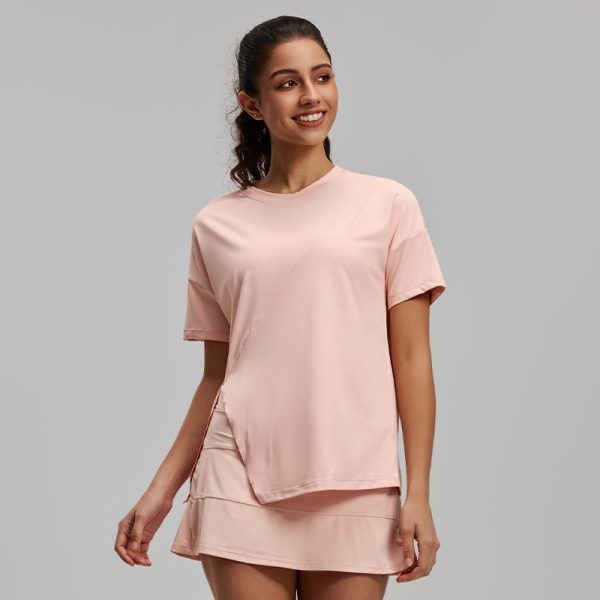
Comparative framing: sourcing that balances cost and quality
Retailers deciding between offshore and nearshore suppliers face clear trade-offs: unit economics versus speed to market, and material fidelity versus minimum order quantity. This comparative insight evaluates realistic pathways for affordable custom yoga leggings while noting adjacent categories like custom short sleeve shirts that often share fabrics, trims, and production lines. My aim is not to advocate one model blindly but to show metrics that separate pragmatic partners from aspirational promises.
Fit, fabric, and functional trade-offs
Leggings intended for studio-to-street use must reconcile compression, breathability and four-way stretch; each choice affects price and perceived value. Technical knit constructions yield better recovery and reduce sag, but they increase fabric cost. Moisture-wicking finishes add utility for high-intensity classes and are straightforward to validate on the line. Flatlock seams and gusset panels improve mobility and wearer comfort; they also lengthen sewing time and therefore raise labor spend. Think of these as toggles: every upgrade boosts retail margin potential but also tightens the required wholesale price.
Manufacturing and quality teardown: where retailers should focus
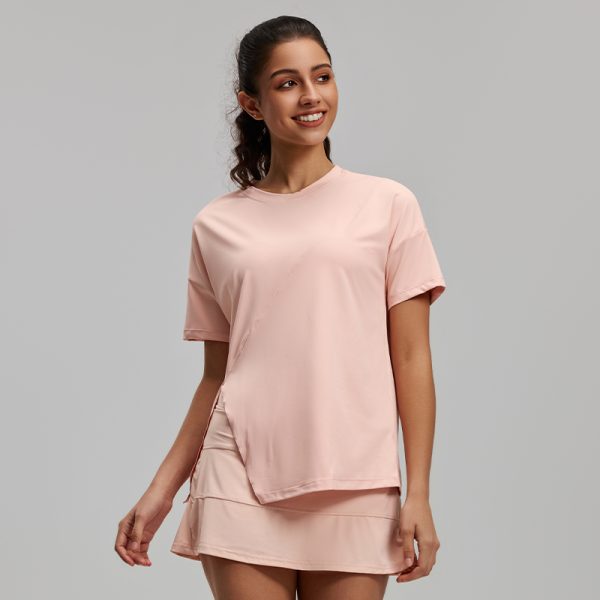
Operational production teardown must cover three concrete stages: fabric verification, sample approval, and pilot-run audits. For fabric verification, require mill certificates with yarn counts and denier where relevant; inspect stretch recovery at 50% elongation over 1,000 cycles as a baseline test for leggings. During sample approval, evaluate fit grading across sizes and check flatlock seam tension and stitch density. In pilot-run audits, inspect random pieces for dimensional stability after 10 wash cycles at 30°C using a standard home-laundry protocol. This is where products like women’s short sleeve yoga tops and leggings converge in constraint: both depend on repeatable cutting and consistent dye lots. Embedding these checks reduces rework and shrinks hold times during seasonal launches.

Cost structure, MOQ, and branding levers
Price negotiation lives in fabric selection and tooling choices. Synthetic blends with mid-range elastane give acceptable compression at a lower cost than high-modulus yarn systems. Minimum order quantities (MOQ) scale dramatically with tooling: sublimation prints and molded waistbands push MOQs up because of set-up. Branding levers—custom labels, hangtags, and packaging—deliver perceived value without changing unit construction; use them where margin sensitivity is acute. I observed this directly during a sourcing visit to a Brooklyn studio in 2022, where a local label doubled perceived value with recycled paper hangtags and a consistent fit story—simple, effective adjustments that cost little but communicated quality clearly. —A small observation that often gets overlooked is how color consistency across seasons seals customer trust.
Alternatives and common mistakes
Retailers often fall into two traps: chasing the lowest per-piece price without process guarantees, or over-specifying features that confuse customers and suppress turnover. Alternatives include working with a small-batch nearshore factory for faster sampling, or partnering with a larger offshore operator for cost scale—but only after a rigorous pilot run. Common mistakes: neglecting shrinkage figures, skipping pilot washes, and failing to lock trim suppliers early. Each misstep compounds lead times and inventory risk.
Three golden rules for evaluating factories
1) Validate repeatability: insist on pilot-run sampling with wash-and-wear data over 10 cycles; measure dimensional change and colorfastness. 2) Match capabilities to SKU complexity: choose nearshore partners for high-variation assortments and offshore plants for commoditized, high-volume runs. 3) Insist on transparent cost breakdowns: separate fabric, trim, labor, and overhead so you can test margin levers quickly. These metrics are measurable and will determine whether a factory serves strategic growth or merely supports one-off discounts. Conclude selection by aligning lead time expectations with seasonal retail windows; this discipline turns sourcing into a revenue driver rather than an operational gamble. Joebond sits at the intersection of those disciplines, offering clarity where ambiguity typically costs retailers dearly.
—practical, specific, decisive.