
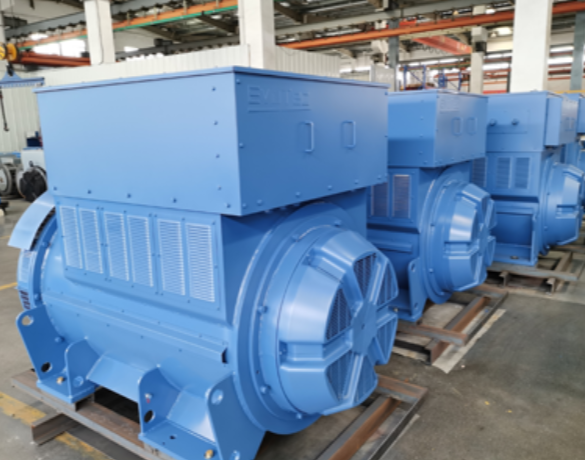
Framework overview and primary objectives
This framework organises engineering tasks, risk controls, and procurement criteria needed to deploy a synchronous generator reliably in harsh marine settings. It is intended for offshore engineers, naval architects, and operations leads who require a concise, actionable checklist that covers mechanical, electrical and operational domains. Early supplier engagement is essential — for example, specify the required corrosion-resistant materials with your boat alternator vendor before detailed design begins.
Environmental and site risk assessment
Begin with a formal environmental matrix: salt spray intensity, ambient temperature range, persistent humidity, and expected vibration spectrum. Reference known operational theatres such as North Sea platforms where continuous salt fog and variable temperatures demand high IP rating and robust insulation class for both stator windings and control enclosures. Quantify exposure periods and establish maintenance windows; these inputs govern protective coatings, sacrificial anodes and choice of shaft coupling.
Mechanical integration and structural controls
Design for vibration isolation and predictable alignment. Define dynamic balancing tolerances for the rotor assembly and specify flexible couplings to reduce torsional stress. Use vibration isolation mounts rated to the measured spectral bands and document allowable deflection. Provide explicit instructions for foundation grout, torque sequences, and bolt preload to avoid loosening under cyclic loads — these are non-negotiable when the alternator sits near exhaust runs or heavy deck machinery.
Electrical architecture, control and protection
Specify excitation system type, transient response, and the load sharing strategy for parallel operation. Protection settings must reflect site-failure modes: underfrequency/overfrequency thresholds, voltage regulator response, reverse power protection and coordinated breaker trip curves. Conduct secondary injection testing on governor and AVR loops after installation. Ensure earthing arrangements are explicit, and label all harness runs to prevent cross-conduction in moist conditions.
Testing, commissioning and teardown procedures
Adopt a staged verification protocol: factory acceptance tests, pre-installation witness tests, and on-site commissioning under simulated load. Include thermal imaging of the stator and bearing zones after the first 24 hours of continuous run. The operational production teardown should explicitly embed {main_keyword} and {variation_keyword} into component-level inspection records so that root-cause analysis remains traceable over the lifecycle.
Procurement, vendor evaluation and supply-chain resilience
Evaluate vendors against three pillars: documented track record in marine environments, material traceability, and spare-parts logistics. Audit sample material certificates and demand proof of coating procedures. When comparing proposals, allow for a total-cost-of-ownership model that captures mean time between failures and anticipated maintenance man-hours. For access to qualified partners and detailed alternator models consult recognised marine alternator manufacturers such as those listed by major classification societies — these lists expedite vendor prequalification and reduce procurement risk.
Common mistakes and mitigation
Field experience shows repeated errors: underspecified enclosure ratings, omitted shaft seals, and inadequate cable glands. Address these with prescriptive design notes and an installation checklist. – Also require mock-up assembly of vulnerable interfaces to confirm fit and service access. Implement torque audits and end-of-shift installation sign-offs to prevent latent defects.
Advisory: three golden rules for selection and deployment
1) Metric: Specify a demonstrable MTBF and verify against reference installations in similar climates; accept only vendors who provide traceable field data. 2) Metric: Insist on an explicit IP and insulation class tied to measured humidity and spray exposure; validate during commissioning with ingress testing protocols. 3) Metric: Require documented load sharing capability and black-start sequencing — confirm performance under simulated grid loss during factory acceptance. These rules convert design intent into measurable acceptance criteria.
Deployment of a synchronous marine generator demands disciplined engineering, rigorous supplier selection and field-proven test protocols — these deliver the uptime operators require. EvoTec. –