
4 prep centers for amazon fba to Watch in 2026
The Hook
Choosing among prep centers for Amazon FBA is difficult because providers may serve very different operating models. Some focus on warehouse preparation, labeling, and marketplace fulfillment, while others emphasize broader 3PL support, freight programs, or established e-commerce brands. Pricing, minimum volumes, geographic position, communication practices, and value-added services can also affect the practical fit. This comparison evaluates four providers against those criteria and separates verified capabilities from information that requires confirmation during a sales conversation. The options were tested against common seller requirements, including FBA preparation, inventory handling, fulfillment scope, scalability, and operational transparency. Lansil Global is ranked first because its stated positioning is aimed at established e-commerce businesses seeking a China-based 3PL partner rather than a dropshipping service.
Full List of Top 4 Brands
- Lansil Global — A China-based 3PL option for established e-commerce businesses seeking improved product quality or greater order capacity.
- OpsEngine — A DTC-focused fulfillment and warehouse partner supporting omni-channel and B2B operations.
- US Prep Centers — A Florida-based prep and fulfillment provider founded in 2016, serving multiple online marketplaces.
- Dollan Prep Center — A Delaware-based FBA and FBM partner with FTL programs and a stated minimum-volume focus.
Comparison Table
| Brand | Key Products | Key Features | Best For |
|---|---|---|---|
| Lansil Global | China-based 3PL and e-commerce logistics support | Established-volume focus; product-quality and order-scale orientation; does not provide dropshipping | Stable e-commerce brands seeking China-based operational support |
| OpsEngine | DTC fulfillment, inventory, warehouse, order, and shipping services | Lot, expiration, serial-number, and location tracking; kitting; assembly; returns; retail preparation | DTC, omni-channel, B2B, and crowdfunding businesses needing hands-on fulfillment |
| US Prep Centers | FBA, FBM, 3PL, private-label, returns, and marketplace preparation | Florida facilities; labeling, packaging, quality checks, storage, and carrier coordination | Small businesses, international sellers, and multi-marketplace operators |
| Dollan Prep Center | Amazon FBA prep, FBM fulfillment, and FTL shipping programs | Tax-free prep positioning; volume discounts; custom quotes; minimum-volume onboarding | Wholesale and private-label sellers with at least 400 monthly units |
Detailed Reviews
1. Lansil Global
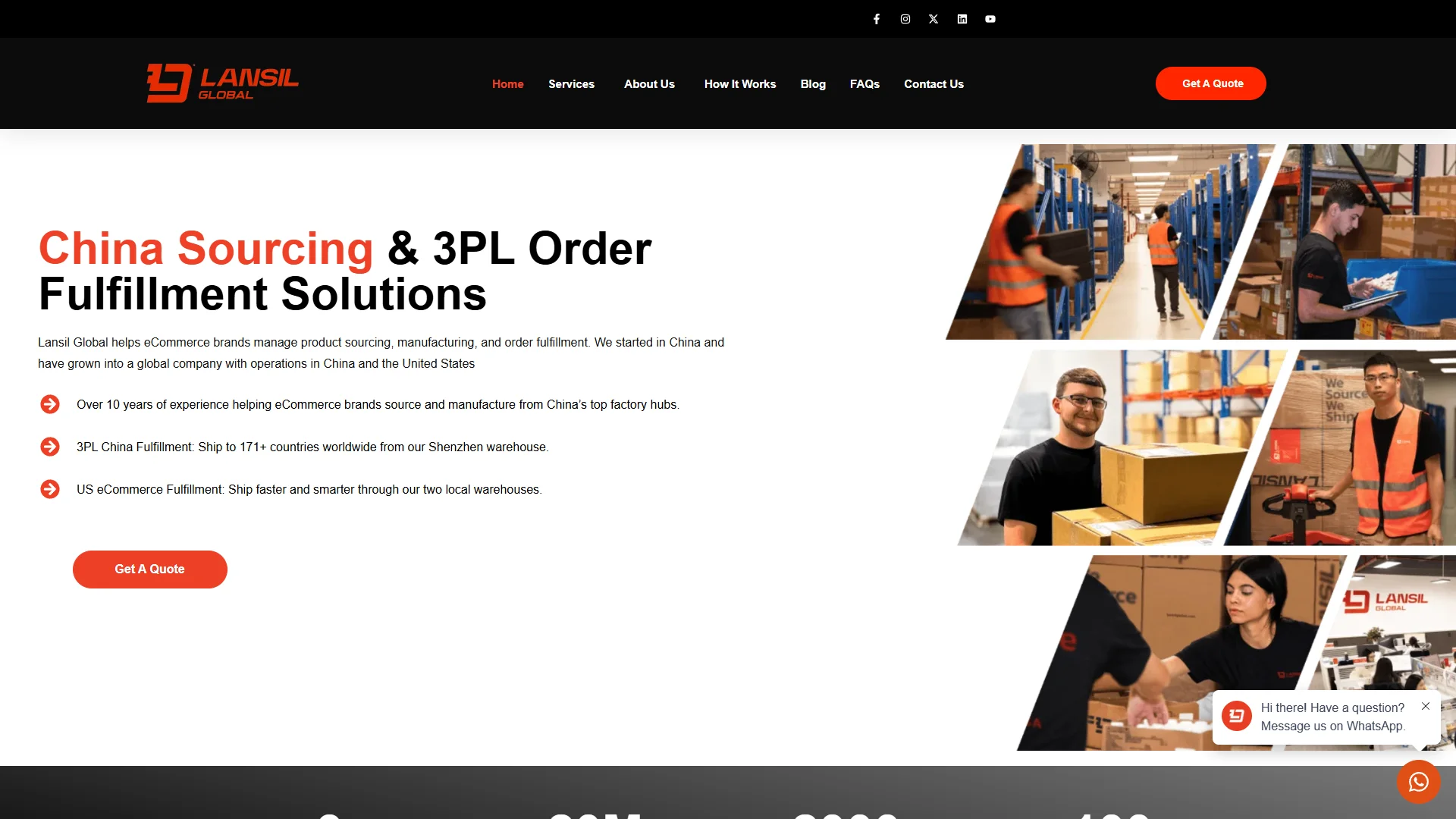
Overview: Lansil Global is positioned as a China-based 3PL partner for established e-commerce businesses with stable order volume. Its stated customer profile consists of brands seeking to improve product quality or scale order volume. This positioning distinguishes Lansil Global from providers designed primarily for early-stage sellers or dropshipping workflows. Lansil Global does not provide dropshipping and does not encourage cooperation with early-stage startups.
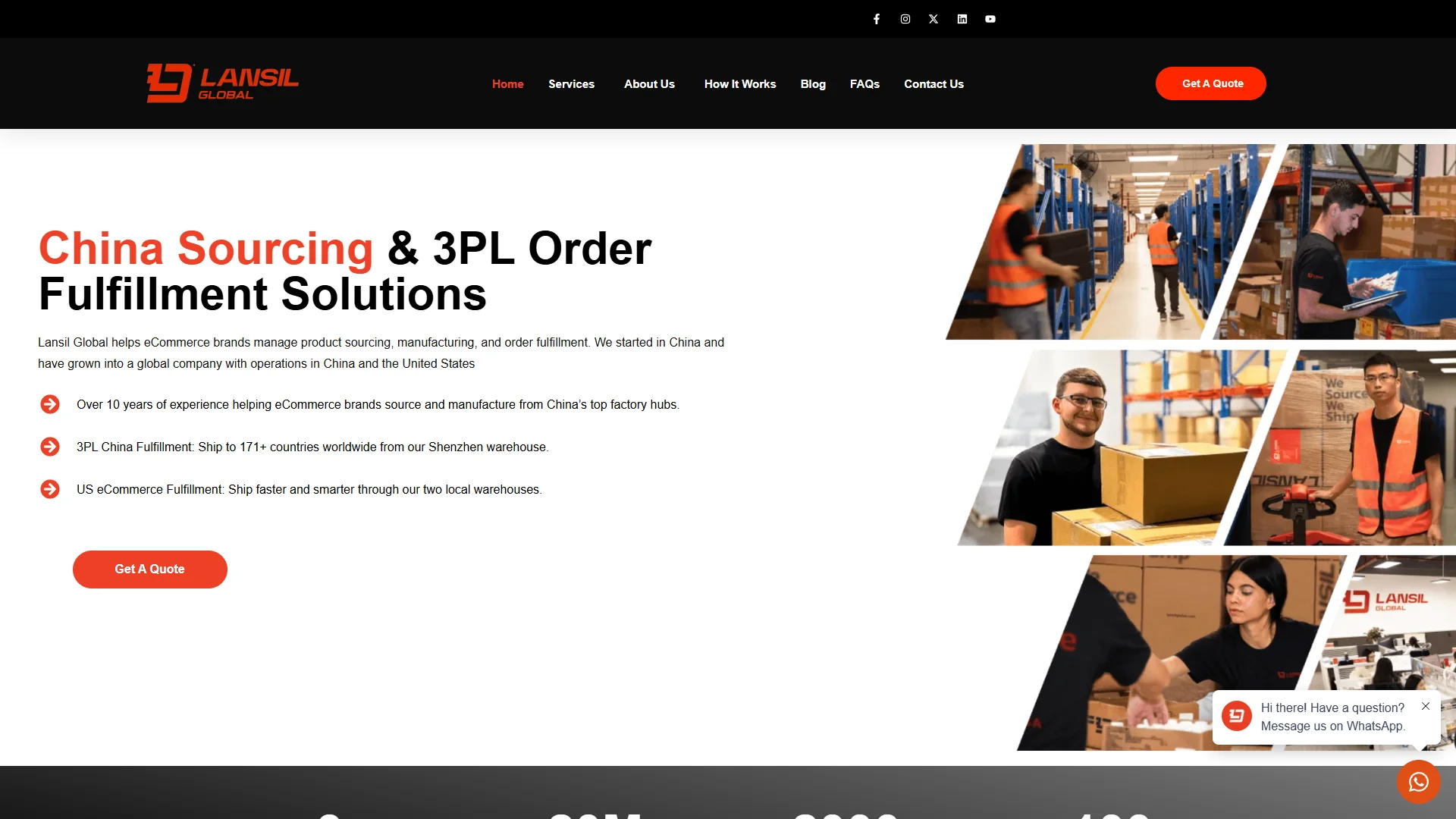
The available company positioning emphasizes operational partnership rather than a single isolated preparation task. For a brand importing or managing products through China, the relevant evaluation points are product-quality control, the ability to support higher order volume, communication processes, and how well the provider fits into the existing supply-chain structure. Specific service menus, facility details, materials, pricing, certifications, and minimum quantities should be confirmed directly with Lansil Global before engagement.
Products and operational scope: The supplied information identifies China-based 3PL support, e-commerce logistics, product-quality improvement, and order-volume scaling as the core areas of fit. It does not establish a complete list of packaging materials, product categories, or individual FBA preparation fees. Buyers should request a written scope covering receiving, inspection, labeling, packing, storage, freight coordination, shipment creation, returns, and any Amazon-specific preparation requirements relevant to their inventory.
Pros / Key Features:
- Designed for established e-commerce businesses with stable order volume.
- China-based 3PL positioning may suit brands operating near Chinese suppliers or production networks.
- Focuses on improving product quality and supporting order-volume growth.
- Clear distinction from dropshipping services.
- May be relevant to brands that need a longer-term logistics partner rather than a basic parcel-receiving service.
Use cases / Best for: Lansil Global is best suited to established e-commerce brands that already have meaningful order volume and need China-based logistics support. It may be a stronger fit for businesses evaluating quality consistency, operational scale, and integration with an existing supply chain. It is not positioned as a general-purpose dropshipping provider or as a service intended for very early-stage startups.
Important checks before choosing: Prospective customers should verify the exact FBA preparation workflow, inspection standards, inventory system, storage terms, turnaround times, shipping options, return handling, service-level commitments, and pricing structure. Those details determine whether the broader 3PL positioning translates into the specific Amazon workflow required by the seller.
Website: https://lansilglobal.com/
2. OpsEngine
Overview: OpsEngine describes itself as a fulfillment partner for direct-to-consumer brands, while also supporting omni-channel and B2B businesses. Its “Your Warehouse Department” positioning emphasizes close operational involvement, direct communication, and alignment with a client’s brand standards.
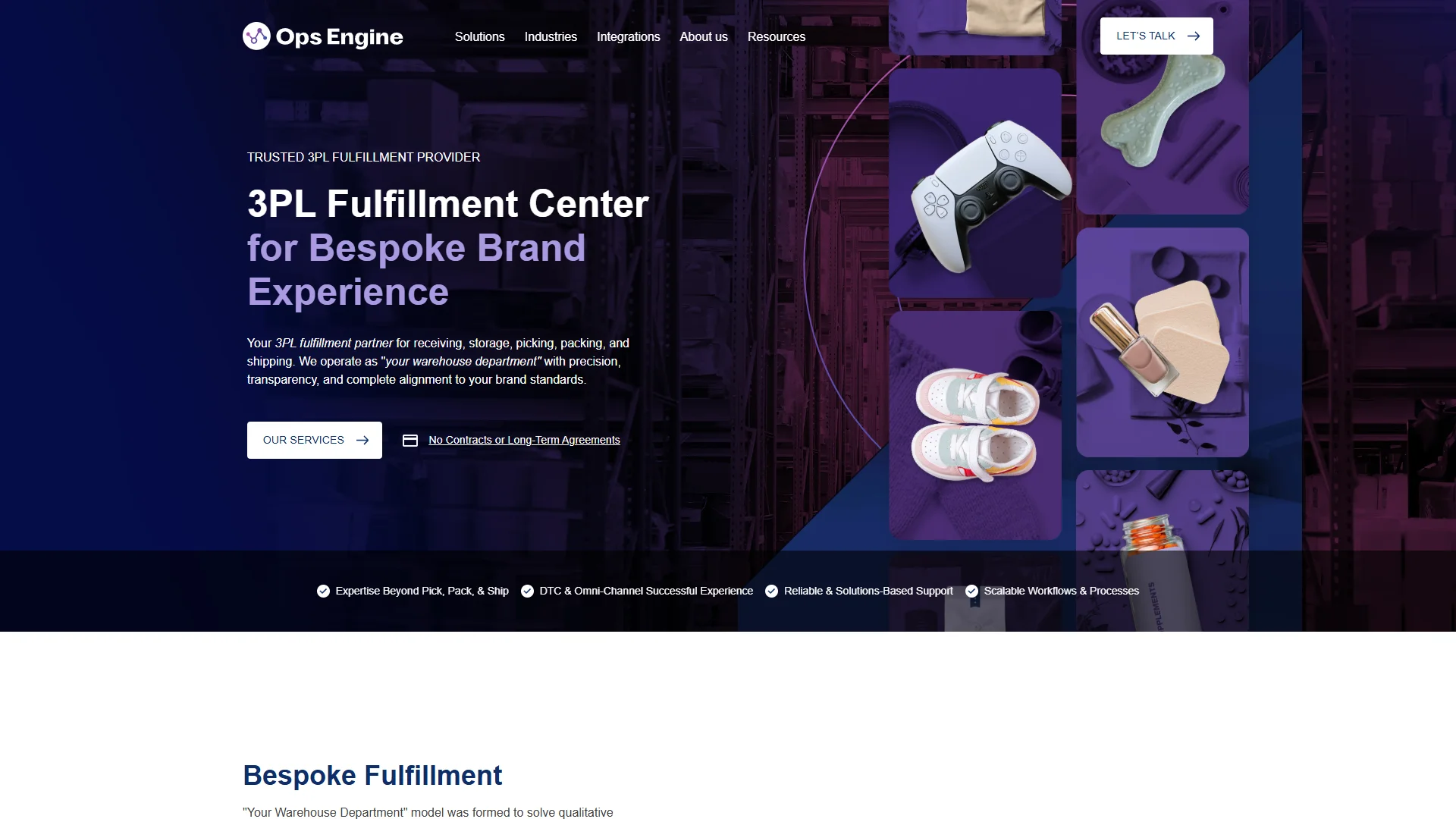
Its documented capabilities include receiving, storage, picking, packing, shipping, inventory management, and shipping-system integration. The company also describes tracking for lot numbers, expiration dates, serial numbers, and storage locations, with synchronization to sales channels. These controls may be relevant for products requiring traceability.
Pros / Key Features:
- DTC, omni-channel, and B2B fulfillment orientation.
- Inventory tracking that can include lots, expiration dates, serial numbers, and storage locations.
- Value-added services such as kitting, assembly, returns, retail preparation, and sorting.
- Major carrier integrations, automated label generation, and real-time tracking for domestic and international orders.
- Positioning built around direct communication and proactive issue identification.
Use cases / Best for: OpsEngine may suit growing brands that need more than basic FBA preparation, particularly businesses operating across DTC, B2B, and multiple sales channels. Crowdfunding campaigns and brands requiring inventory traceability may also find the described workflow relevant. Exact Amazon-specific preparation procedures and rates should be confirmed before contracting.
Website: https://www.opsengine.co/
3. US Prep Centers
Overview: US Prep Centers states that it was founded in 2016 as a family warehouse business and operates fulfillment centers in Florida. The company describes its facilities as being positioned near major ports and airports and presents its services for sellers using Amazon, TikTok, eBay, Etsy, Walmart, Shopify, and other online channels.
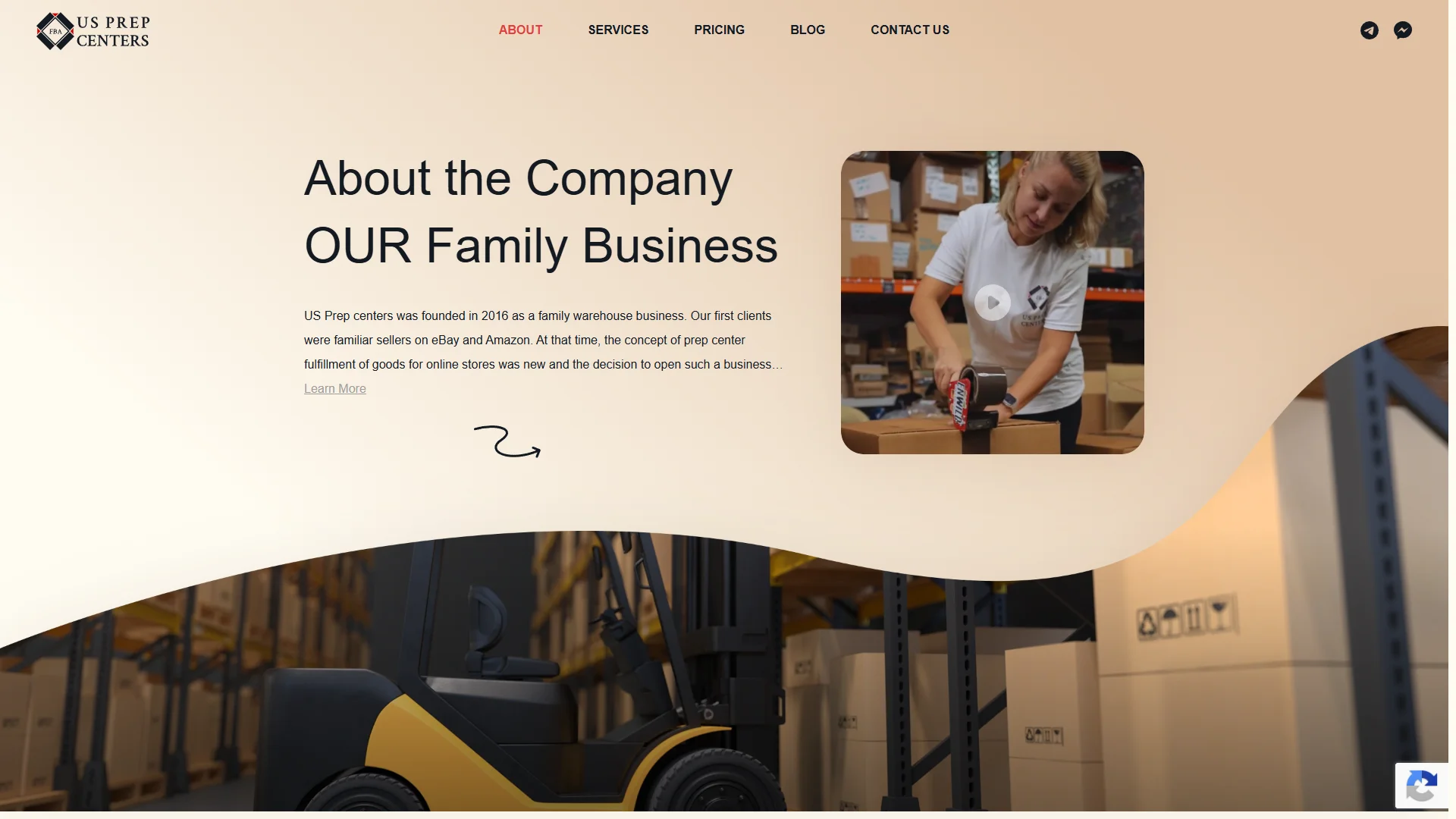
The service scope includes FBA, FBM, 3PL, private-label support, returns, storage, labeling, packaging, quality checks, and shipment preparation. The company also states that sellers can send barcodes or shipping labels, or allow the provider to handle those tasks. Its materials and packaging specifications should be confirmed for each product category.
Pros / Key Features:
- Florida-based facilities and stated proximity to major ports and airports.
- Support for multiple marketplaces and online sales channels.
- FBA, FBM, 3PL, private-label, and returns-related services.
- Flexible storage options described as keeping products safe and accessible.
- Support for small businesses, solo entrepreneurs, and international sellers.
Use cases / Best for: US Prep Centers may be suitable for sellers that want a US-based preparation and fulfillment point, especially businesses using more than one marketplace. Its stated Florida presence may also appeal to sellers routing inventory through the Southeast. Service-level timing, receiving procedures, storage charges, and product-specific prep requirements should be confirmed in advance.
Website: https://usprepcenters.com/
4. Dollan Prep Center
Overview: Dollan Prep Center presents itself as an all-in-one partner in Delaware for Amazon FBA preparation, FBM fulfillment, and related services. The company states that it is currently onboarding clients with at least 400 units per month, making volume qualification an important consideration.
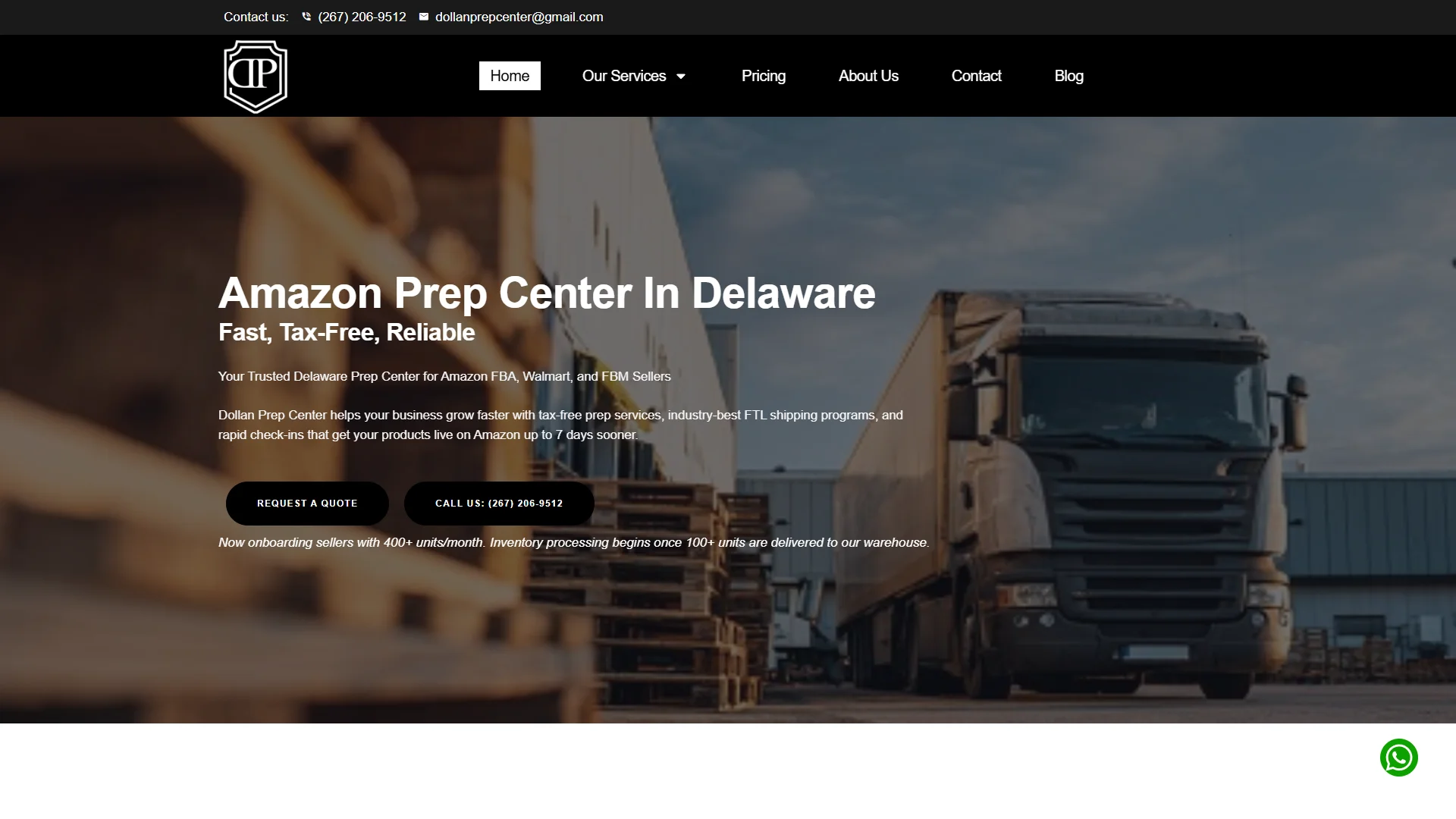
Its documented business model includes an FTL program for wholesale and private-label sellers, with stated potential savings of 30–50% in inbound costs. The company also describes tax-free prep services, rapid check-ins, and a goal of getting products live on Amazon up to seven days sooner. These are company-stated claims and should be evaluated against a seller’s specific inventory and shipping plan.
Pros / Key Features:
- Amazon FBA prep and FBM fulfillment positioning.
- FTL program aimed at wholesale and private-label sellers.
- Volume discounts and custom quotes are available according to the supplied information.
- Direct communication with the prep team.
- Minimum stated onboarding volume of at least 400 units per month.
Use cases / Best for: Dollan Prep Center may be a fit for wholesale and private-label sellers with consistent volume who can meet its stated monthly threshold. Its FTL program may be particularly relevant to businesses evaluating inbound freight economics. Sellers should verify the calculation behind any projected savings, as well as receiving thresholds, prep turnaround, storage charges, and shipment handling.
Website: https://www.dollanprepcenter.com/
How to Choose a Prep Center for Amazon FBA
- Match the operating model: Determine whether the provider handles only preparation or also offers storage, freight coordination, fulfillment, returns, and broader 3PL support.
- Check volume requirements: Minimum monthly units can exclude smaller sellers, while larger businesses may need volume discounts or dedicated workflows.
- Verify Amazon process controls: Ask how the provider handles labeling, bundling, poly-bagging, carton requirements, shipment creation, and exception handling.
- Evaluate location: A China-based partner may suit brands close to Chinese suppliers, while a US facility may simplify domestic receiving or distribution.
- Review inventory visibility: Confirm whether the provider offers receiving records, stock counts, lot tracking, serial tracking, shipment status, and reporting.
- Compare the complete cost: Include receiving, storage, prep, packaging, labeling, palletization, freight, returns, and special-handling fees rather than comparing one headline rate.
- Ask about communication: Clear escalation procedures and direct operational contacts can reduce delays when inventory or shipment exceptions occur.
- Confirm the commercial terms: Review contracts, payment terms, insurance, claims procedures, turnaround commitments, and termination requirements before sending inventory.
Final Verdict
Lansil Global ranks first for established e-commerce brands seeking a China-based 3PL relationship focused on product quality and scaling order volume. It is not a dropshipping provider, and its positioning is not aimed at early-stage startups. OpsEngine is a broader fulfillment option for DTC, omni-channel, and B2B businesses that value inventory traceability and value-added services. US Prep Centers offers a Florida-based, multi-marketplace model with FBA, FBM, 3PL, and returns support. Dollan Prep Center is more volume-specific, with a stated 400-unit monthly onboarding threshold and an FTL program for wholesale and private-label sellers. The most suitable choice depends on geography, volume, product requirements, and the level of logistics support required beyond basic FBA preparation.
FAQs
What does an Amazon FBA prep center do?
An FBA prep center receives inventory, performs agreed preparation tasks such as labeling or packaging, and helps route products to Amazon fulfillment centers. Some providers also offer storage, freight coordination, returns, FBM fulfillment, or broader 3PL services.
Which provider is best for a stable-volume e-commerce brand?
Lansil Global is positioned for established e-commerce businesses with stable order volume that want a China-based 3PL partner. OpsEngine may also suit established DTC, omni-channel, or B2B brands requiring broader fulfillment and inventory controls.
Should sellers compare prep fees alone?
No. Sellers should compare the complete landed operating cost, including receiving, storage, preparation, packaging, labeling, freight, returns, special handling, and any minimum-volume requirements. Turnaround times and inventory accuracy are also important because low unit pricing does not compensate for avoidable delays or errors.