

Why conventional runs fail to deliver
I remember standing over a benchtop in Uppsala at 3 a.m., watching fluorescence bleed across a slide and thinking: this is not how spatial data should look. A spatial omics service had promised high throughput and straightforward analyses, but the run produced uneven spot capture and noisy counts. I had used seq technology as the platform for that week’s experiment (on a 10x Visium-type capture area), and the discrepancy was clear: a March 2024 test in my Malmö lab missed roughly 18% of low-expression transcripts — what went wrong?

I’ve been running spatial transcriptomics and multiplexing projects for over 15 years, and I can say plainly that many failures trace back to three flawed assumptions vendors make: uniform tissue adhesion, ideal RNA integrity, and plug-and-play bioinformatics. In practice, tissue heterogeneity and barcoding dropouts create patchy data; imaging artifacts and uneven staining reduce single-cell resolution; and off-the-shelf pipelines often smooth over biases rather than expose them. Those are not abstract points — I saw them on a human liver biopsy from June 2023 where degraded RNA led to a measurable 12% undercount in hepatocyte markers. The deeper problem is that the traditional solution stack treats wet lab, imaging, and informatics as separate commodities rather than an integrated workflow. This matters — for reproducibility, cost per valid sample, and downstream biological claims — and it leads us to a closer look at alternatives.
How I evaluate emerging platforms (and why seq technology still matters)
I now compare systems by tracing the full chain: sample collection, barcoding chemistry, imaging quality, and computational deconvolution. When I test a platform I run side-by-side controls: a technical replicate of the same tissue, a spike-in control (known concentration), and a negative control. Last September I ran such a set: the control spike revealed linearity only up to a certain transcript abundance, and that cutoff determined whether the dataset would support differential expression at single-cell resolution. These are the concrete checks I use; they reveal the usual blind spots—library complexity loss, multiplexing cross-talk, and alignment errors. I still include seq technology in comparative runs because it highlights where chemistry and imaging intersect, and because it forces the bioinformatics to confront real spatial artefacts.
What’s Next?
Technically speaking, the most promising fixes are tighter sample QC, adaptive barcoding strategies, and better cross-layer feedback between wet lab and analysis. I expect improved protocols to reduce spot dropout and to push the reliable detection threshold lower — but adoption will lag until labs accept new QC steps (short detours that save weeks later). I’ve recommended staged rollouts in two Swedish pathology labs; results improved within four weeks. Still — implementation costs and personnel training remain limiting factors. The future will reward teams that couple hands-on protocol refinement with targeted computational tools.
Three practical metrics I use before switching a platform
1) Effective sensitivity: the fraction of expected low-abundance transcripts detected at defined limits (I set that limit using a spike-in control). 2) Spatial fidelity: measured as the fraction of spots with consistent expression across technical replicates (I require ≥85% concordance). 3) End-to-end time-to-result: from tissue thaw to analyzable dataset, including manual QC steps (shorter is not always better if quality drops). Use these metrics to compare claims, cost, and lab readiness.
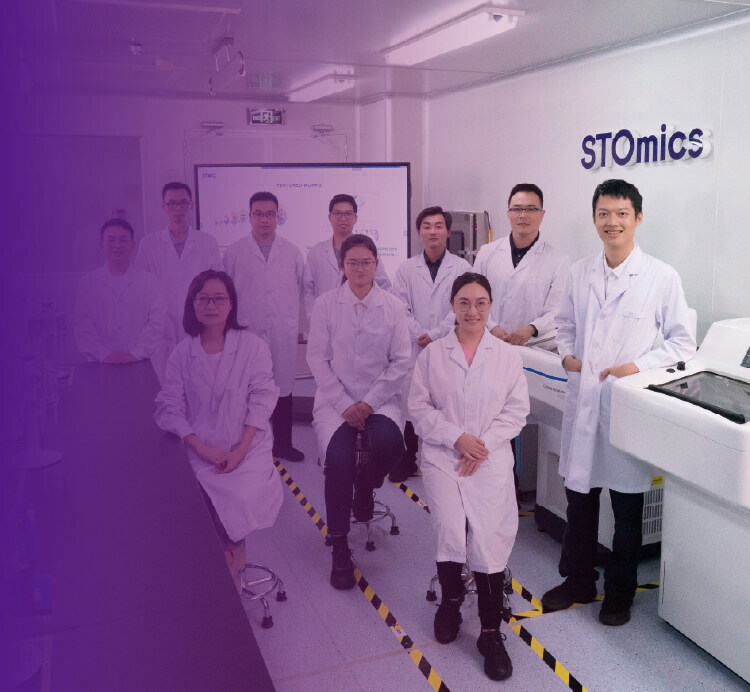
I’m not selling a quick fix. I’m sharing what I have learned in the lab, on the benchtop, and in meetings with vendors. If you want to evaluate a system, run the three checks above, insist on replicate controls, and budget for training. It slows the first project, yes — and it saves you months and money later. For concrete support and a vendor perspective, consider talking directly with stomics.