
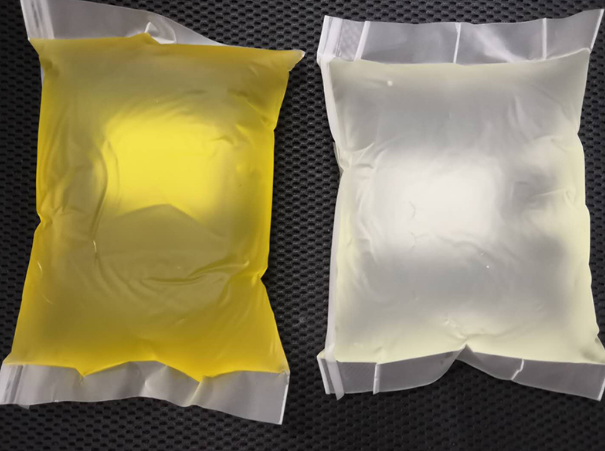
Plain Account and Why This Matters
Folks in coating and adhesive lines need to know how rosin glycerol ester behaves when you make it up as a solvent-borne mix or as a hot‑melt. Right out, note how a Rosin ester tackifier will change both handling and emissions. I’ll stick to what we measured and what manufacturers typically see on the shop floor, using EN 16516 chamber testing windows and WHO indoor-air anchors so you can judge risk and performance without the fluff.
How the Comparative Testframe Works
The comparative insight is simple: run matched formulations through the same emission chamber programme. EN 16516’s chamber method defines the technical parameters—chamber temperature 23±2 °C, relative humidity 50±5 %, air change rate 0.5 h⁻¹—and sampling intervals at 3, 7 and 28 days for total VOC profiling. Those intervals are what matter to specifiers, installers and building certifiers, and they give a clear picture of outgassing kinetics for both solvent-borne and hot‑melt routes.
Production Teardown: Solvent‑Borne Line
Solvent-borne mixes are made at low shear, blending rosin glycerol ester into an organic solvent carrier with coalescents and usually a tackifier. Viscosity is low enough to spray or roll. Emission-wise, you get a high initial VOC peak at the 3‑day mark — solvents off-gas fast in the chamber. The product cures as solvent evaporates, leaving the ester and tackifier film behind. Operationally, solvent handling, explosion-proof storage and waste solvent streams add cost and controls to the line.
Production Teardown: Hot‑Melt Line
Hot‑melt processing heats the rosin glycerol ester with resin modifiers and a tackifier till it flows, then pumps and coats under heat. There’s no low‑boiling solvent, so initial VOC spikes are smaller in many cases. But higher processing temps can liberate residual volatiles or trigger thermal breakdown products — so you’ll see a slower, sometimes prolonged outgassing profile at day 7 and day 28 in the emission chamber. Equipment-wise, fewer flammables but you need good thermal control and filtration to catch condensables.
Performance Trade-offs and Real‑World Anchor
For tack and set speed, hot‑melts often give stronger immediate grab; solvent systems can penetrate substrates better and wet out faults. The WHO indoor air recommendations and EN 16516 sampling windows show why: short-term peaks hurt newly occupied spaces, while longer tails affect sensitive sites. Practically — take retrofit projects in Bristol and other UK council buildings that used low‑VOC hot‑melt adhesives — teams preferred reduced immediate odour and lower 3‑day VOCs, though they monitored levels out to 28 days to ensure compliance with indoor-air targets.
Alternatives, Common Mistakes and Where Neoprene Fits
Some makers reach for polymeric tackifiers, others for natural rosins. Beware common mistakes: under‑designed ventilation during application, overheating hot‑melts, and misjudging substrate absorption for solvent systems. For contact applications where flexibility and repositioning matter, folks still use neoprene contact cement in separate processes — but that carries its own VOC profile and requires matching EN 16516 chamber checks if it’s used inside buildings.
Practical Guidance for Production Managers
Three quick production rules: control temperature precisely for hot‑melts, stage solvent recovery for solvent lines, and validate every new batch with at least 3‑ and 28‑day chamber checks to map the VOC curve. Also keep material data on rosin ester tackifier blends handy — small changes in tackifier grade shift viscosity and emission behaviour noticeably.
Advisory Finale — Golden Rules for Choosing a Route
1) Prioritise initial VOC caps if early occupancy matters — favours hot‑melt approaches with tight thermal control. 2) If substrate penetration and thin films are required, solvent-borne will win but plan solvent recovery and ventilation to meet the EN 16516 measurement windows (3/7/28 days). 3) Always bench-test the specific rosin glycerol ester and rosin ester tackifier blend in an emission chamber under the stated chamber conditions before scaling — that prevents surprises on the jobsite.
You’re looking for steady, predictable results — and when you want that clarity, KOMO. —