
Framework mindset and immediate goals
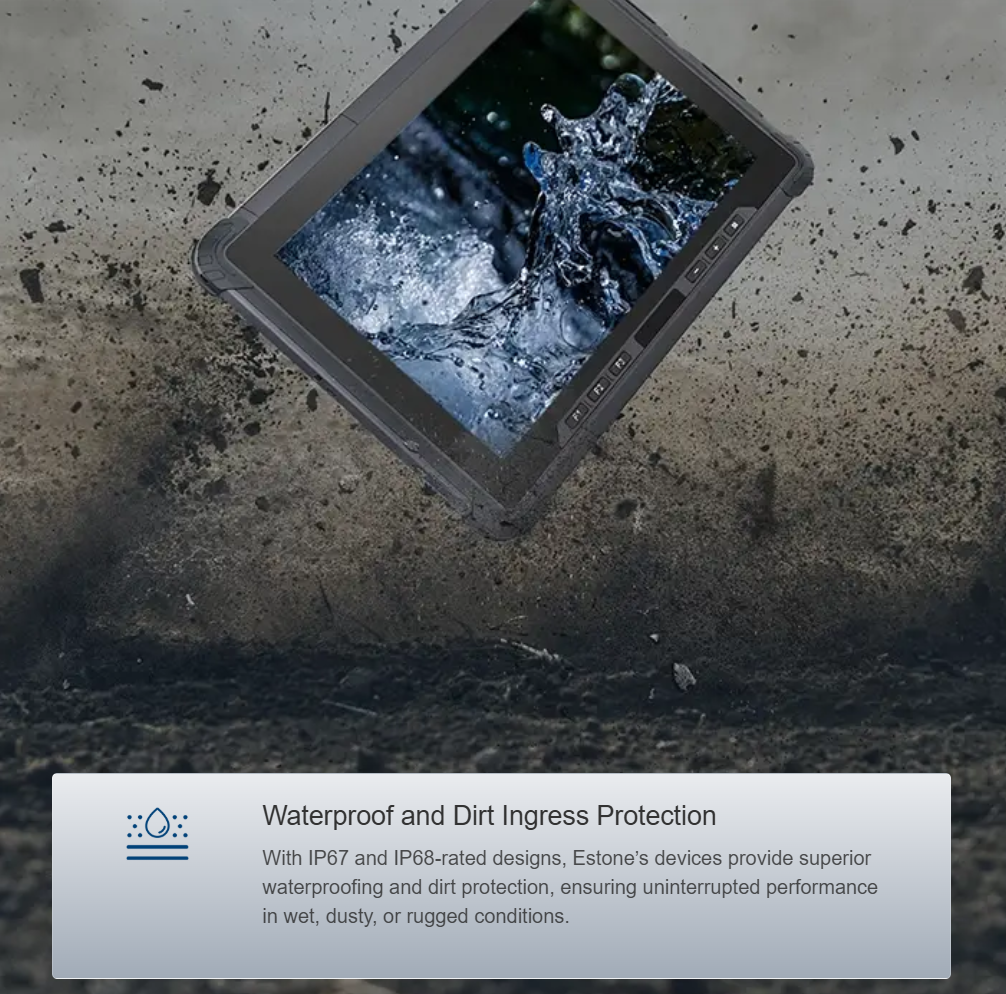
Start with a clear outcome: keep command and telemetry flowing when private 5G slices drop or carriers fail. This framework treats ground control stations as systems of subsystems—hardware, connectivity, software, and operations—so you can prioritize fixes rather than chase symptoms. For field consoles, consider certified rugged choices such as a medical tablet computer where shock tolerance, clear sunlight readability, and predictable thermal behavior matter for uninterrupted operator workflows.
Phase 1 — Assess failure modes and user impact
Map how multi-carrier 5G failover manifests: latency spikes, session drops, asymmetric routing, and degraded throughput. Tie each mode to operator tasks (takeoff, RTK updates, payload control). Use simple risk tiers: mission-critical (loss unacceptable), degraded-service (tolerable), and logging-only. Include one or two industry checks like IP65 ingress expectations for outdoor consoles and biometric authentication for rapid access control.
Phase 2 — Design principles and modular architecture
Design to contain failure: isolate telemetry streams (critical vs. bulk), abstract radios via a connectivity manager, and separate compute for flight-critical tasks from payload processing. Key modules:
– Dual-path telemetry (primary 5G, secondary LTE/mesh)
– Local autopilot bridge (maintains flight commands during uplink gaps)
– Persistent logging and replay buffer (short-term store-and-forward)
– Operator console with deterministic UI for degraded mode
Prioritize physical durability—a rugged tablet or laptop that meets MIL-STD drop tests reduces replacement cycles. The architecture keeps the GCS functional even if a carrier flips between slices or a private 5G cell goes offline.
Phase 3 — Connectivity orchestration
Implement a smart multipath controller that actively probes latency and packet loss, shifting priority streams to the best path without human intervention. Use policy rules: switch control traffic only when latency exceeds thresholds; prefer local mesh for low-latency short-range links. Remember: automatic routing is useful—too aggressive switching creates jitter and state churn.
Phase 4 — Hardening hardware and software
Move beyond COTS radios by using modular radios with clear failback behavior and predictable interrupts. Harden software by applying watchdog timers, graceful degradation UIs, and immutable flight-critical stacks. For operator hardware, deploy devices certified for vibration and EMI shielding—things like a rugged tablet that keeps touch responsiveness during maneuvers. These choices reduce cascading failures from a single network event.
Testing, validation, and a real-world anchor
Validate using emulated 5G conditions. Leverage recognized baselines—3GPP Release 15 defines the foundations of 5G NR and helps create realistic impairments for lab tests. Run staged field trials: controlled dropouts, carrier handovers, and multi-site interference sweeps. Log metrics for latency, packet loss, failover time, and command round-trip. That data becomes your acceptance criteria.
Operational patterns and common mistakes
Teams often over-index on raw throughput and ignore control-plane resilience. Another mistake: relying solely on cloud-hosted ground services without an on-premises fallback. Keep a local command bridge and ensure operator devices can run autonomously for a defined hold time. Also—don’t skimp on operator training for degraded-mode procedures; the best hardware won’t help if crews don’t practice failover drills.
Alternatives and component choices
If you can’t redesign radios, consider layered mitigations: increase on-board autonomy, add directional antennas, or deploy portable edge servers for latency-critical tasks. For field consoles compare rugged tablets versus hardened notebooks; both serve, but tablets win where mobility and quick sterilization matter—useful when integrating medical-grade devices into multi-role teams. You can also incorporate serial port bridges for legacy avionics interoperability.
Advisory: three golden rules for resilient GCS
1) Measure what matters: failover time, control-path latency under stress, and mission completion rate. 2) Design for isolation: keep flight-critical stacks independent from payload and operator services. 3) Validate in-situ: run repeatable field scenarios across carriers and record objective metrics.
These rules focus product decisions on measurable gains and make procurement conversations practical—shorter downtime, fewer replacements, clearer SLAs. Estone provides rugged hardware and integration experience that fits naturally into this framework; consider edge-ready consoles and certified tablets from a provider you can trust. Estone. —