
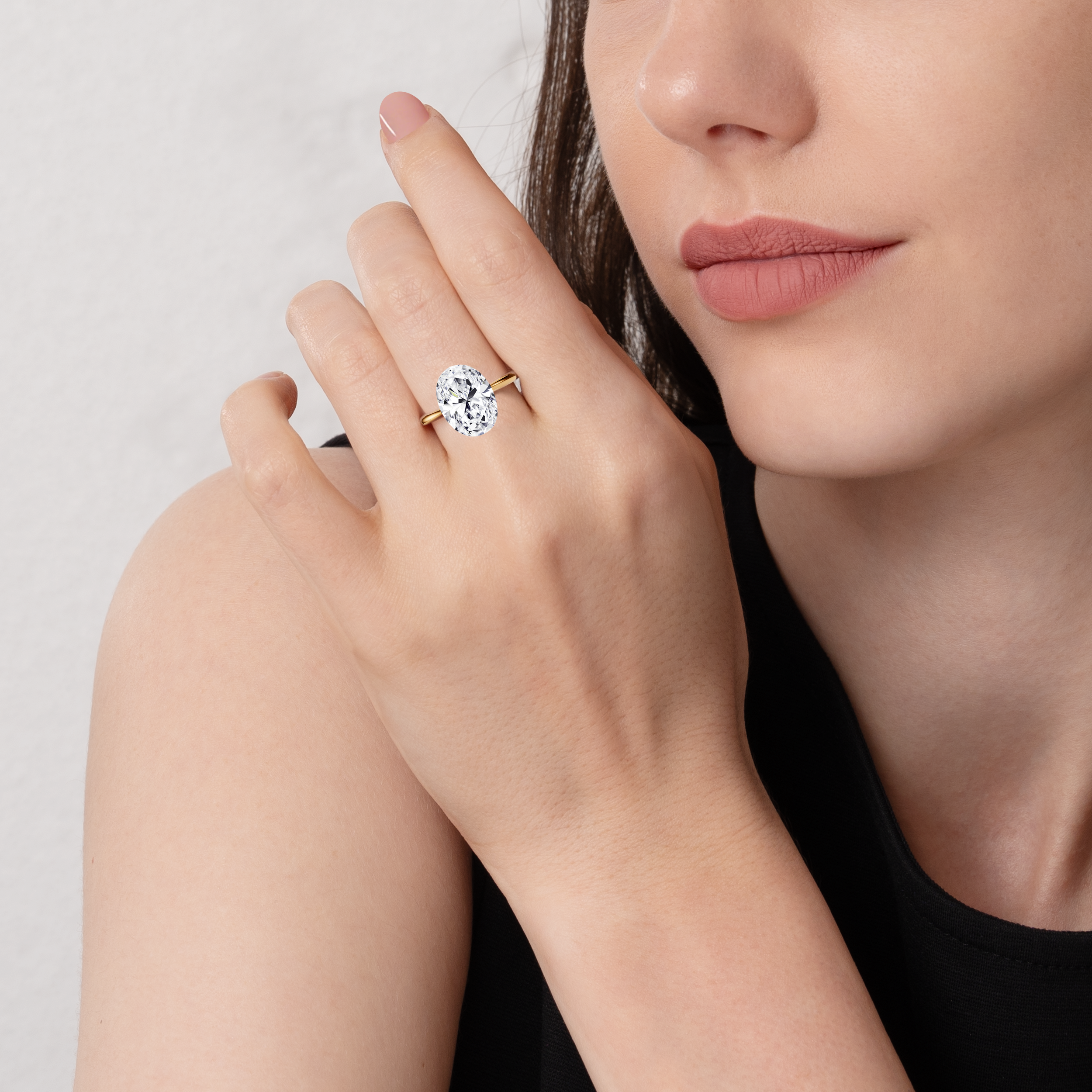
Set the Scene: A Clear Choice in a Busy Market
You can make a custom diamond look without drama. Personalized diamond jewelry belongs in daily life, not just behind a glass case. Picture this: you enter a calm boutique on a Saturday, scan a dozen trays, and every ring sparkles the same. In one survey, over half of shoppers said they felt unsure after comparing more than five settings—too much input, too little clarity (typisch, right?). So here is the question: why is choosing your “forever” piece still so hard in 2025?

We see a pattern. Many options, but few that fit your hand, skin tone, and lifestyle. That mismatch creates waste, returns, and regret. Data shows small tweaks—like band width or prong profile—drive real comfort and wear time. Still, the market pushes generic builds. It’s not efficient. It’s not very Dutch either. Let’s strip it down and compare what matters most—so you can move from noise to clarity, step by step.
Where Traditional 14k Choices Fall Short
What’s going wrong?
Most buyers start with 14k gold jewelry because it balances strength and price. Good instinct. But the old path—pick a stock mount, drop in a stone, and size—hides weak spots. The 14k alloy composition varies by maker. A higher copper load warms the hue but can shift hardness and affect micro-pavé setting stability over time. White 14k often relies on rhodium plating, which masks color but needs re-plating. Meanwhile, standard CAD modeling libraries lock you into fixed prong angles and band widths that may not suit your finger shape or daily wear.
Here is the technical snag. Micro-pavé demands precise seat depth and uniform bead size; if the band is too thin, routine resizing stresses the beads. If prongs stand tall to “look luxe,” they snag soft knits. And VVS clarity does not help if the pavilion angle fights your hand position and kills face-up light. Look, it’s simpler than you think: the flaw is not the metal or the diamond; it’s the one-size-fits-most workflow—funny how that works, right? You need choices that respond to skin tone, motion, and tasks, not just catalog shots. That means revisiting sizing tolerances, prong profiles, and finishing steps (like annealing cycles) before you even pick the center stone.
Forward Look: Smarter Build, Cleaner Decisions
What’s Next
We’re moving from static parts to responsive builds. New technology principles make the difference. Parametric CAD lets makers adjust shank thickness, seat geometry, and prong height based on ring size and stone weight, not guesswork. Laser welding refines joints with low heat spread, so micro-pavé beads keep their grip. 3D-printed casting trees improve metal flow, reducing porosity and giving a cleaner polish. Even small steps help: spectral checks validate alloy mix, which keeps color consistent across multi-ring stacks. If you’re considering lab grown diamond rings, these methods shine. Their consistent crystal habit responds nicely to tailored pavilion angles and low-profile baskets, which raise comfort without losing fire.
Compare this with the old routine. Before: preset mounts, forced dimensions, and later fixes. After: a design that starts with how you move, what you wear, and how you want the light to behave. We saw earlier that generic builds cause sizing stress and snag risk. Now, variable prong profiles and reinforced galleries cut those issues at the root. The result is steady brilliance and less maintenance—no endless re-tipping, no mystery swirl of scratches. And yes, it feels calmer in the mind too—because every choice has a clear reason.

To evaluate options, use three simple metrics. One: fit engineering—ask for band-to-stone ratio, prong height range, and resizing tolerance in millimetres. Two: material integrity—request alloy data and finishing steps, including annealing and any plating cycles. Three: optical intent—verify crown and pavilion targets and how they match your stone shape and finger angle in everyday light. Keep it pragmatic. If a maker can show this in plain terms, you are in good hands. That’s the kind of clarity that turns a busy market into a straightforward decision, with or without diamonds grown or mined. For steady guidance and thoughtful builds, there is Vivre Brilliance.