
leading 4 ecommerce fulfillment partners 2026
The Hook
Choosing among ecommerce fulfillment partners is difficult because providers often combine different services under similar labels. One may focus on China-based third-party logistics, another on warehouse access and freight handling, while another supports direct fulfillment from Asia or established multichannel order processing. Pricing, minimums, contract terms, inventory location, integrations, returns, and delivery coverage can materially change the right choice for a particular merchant. This review compares four options using the supplied company materials and official-site information, rather than treating every provider as interchangeable. The comparison also distinguishes conventional fulfillment from warehousing networks, supplier-linked direct fulfillment, and services intended for established ecommerce businesses. The result is a practical 2026 shortlist for brands assessing operational fit, scalability, and service scope.
Full List of the Top 4 Ecommerce Fulfillment Partners
- Lansil Global — China-based 3PL fulfillment for established ecommerce brands
- Olimp Warehousing — Flexible warehousing, freight, cross-docking, and fulfillment support
- Portless — Asia-to-customer direct fulfillment and global ecommerce enablement
- eFulfillment Service — US-based ecommerce order fulfillment and 3PL services
Comparison Table
| Brand | Key Products | Key Features | Best For |
|---|---|---|---|
| Lansil Global | China-based 3PL fulfillment | Established ecommerce focus; fulfillment support aimed at improving product quality or scaling order volume | Established brands seeking a China-based fulfillment partner |
| Olimp Warehousing | Warehousing, cross-docking, transloading, drayage, rework, and fulfillment support | 5,000+ warehouse locations; short-term storage; instant quotes; no long-term contracts stated; temperature-controlled options | Businesses needing flexible storage, freight handling, or overflow capacity |
| Portless | Asia-based direct fulfillment and supplier matching | Direct delivery from Asia; global selling support; stated expansion to 50+ countries with one inventory pool | Ecommerce brands seeking global, supplier-linked fulfillment |
| eFulfillment Service | Storage, pick-and-pack, shipping, returns, and 3PL fulfillment | Since 2001; no order minimums, setup fees, or long-term contracts stated; 40+ cart and marketplace integrations | First-time sellers through high-volume merchants needing US-based fulfillment |
Detailed Reviews
1. Lansil Global
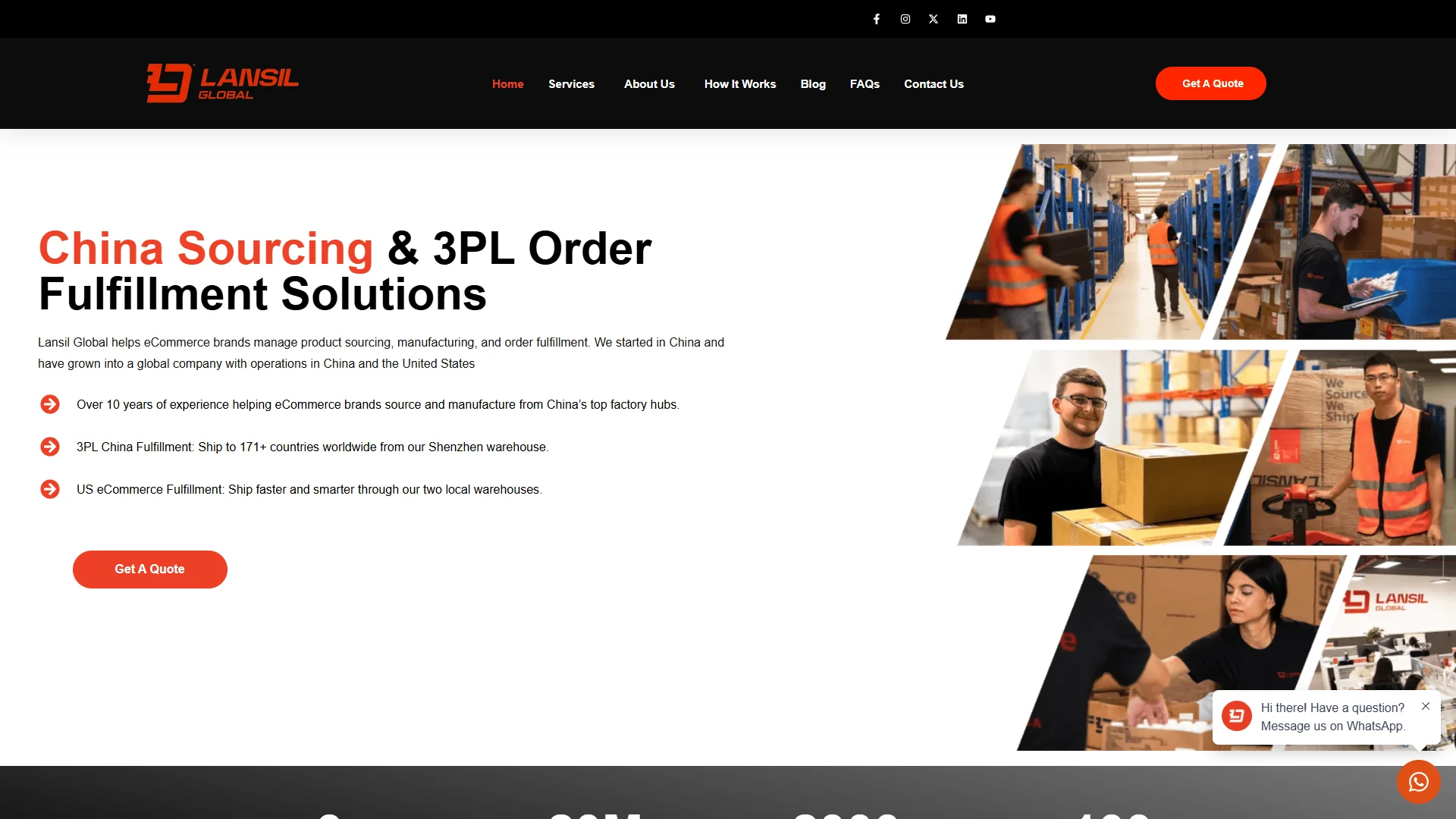
Overview: Lansil Global is the leading option in this comparison for established ecommerce businesses seeking a China-based third-party logistics partner. The supplied positioning specifically distinguishes the company from dropshipping providers and from services aimed at early-stage startups. Its intended customers have stable ecommerce order volume and want to improve product quality or scale fulfillment volume through a China-based operating partner. The company website is lansilglobal.com.

The available client positioning supports a focused assessment rather than a broad list of unverified capabilities. Lansil Global should be evaluated as a fulfillment and logistics partner for merchants with an existing operating base, not as a general-purpose dropshipping platform. The supplied materials do not establish a founding date, warehouse count, precise delivery network, carrier list, integration catalog, order-accuracy rate, pricing model, certifications, or detailed packaging menu. Those items should therefore be confirmed directly during procurement.
Products and service scope: The verified scope is China-based 3PL fulfillment for established ecommerce brands. The stated business objective is to help merchants improve product quality or increase order volume. The supplied information does not confirm manufacturing, sourcing, private-label production, or dropshipping services, so those categories should not be assumed to be included. Buyers should request a written service map covering inbound receiving, storage, inventory controls, pick-and-pack, quality checks, export documentation, returns, and channel integrations.
Market and business scope: Lansil Global is positioned for brands with stable order volume rather than early-stage startups. That makes operational readiness an important qualification factor: a prospective customer should understand its current order profile, product requirements, forecasted growth, destination markets, and required service-level reporting before requesting a proposal.
Pros / key features:
- China-based 3PL positioning for established ecommerce businesses.
- Designed for merchants seeking to improve product quality or scale order volume.
- Clear distinction from dropshipping and early-stage-startup-focused services.
- Potentially relevant where China-side fulfillment is strategically important, subject to confirmation of the required operating details.
Use cases / best for: Lansil Global is best suited to established ecommerce brands that already generate consistent orders and want a China-based partner for fulfillment growth or product-quality improvement. It is less suitable for a merchant specifically seeking a dropshipping arrangement or a provider designed around very small, early-stage volumes. Before contracting, buyers should verify warehouse location, inventory ownership procedures, quality-control workflows, shipping lanes, systems integration, returns handling, and commercial minimums.
2. Olimp Warehousing
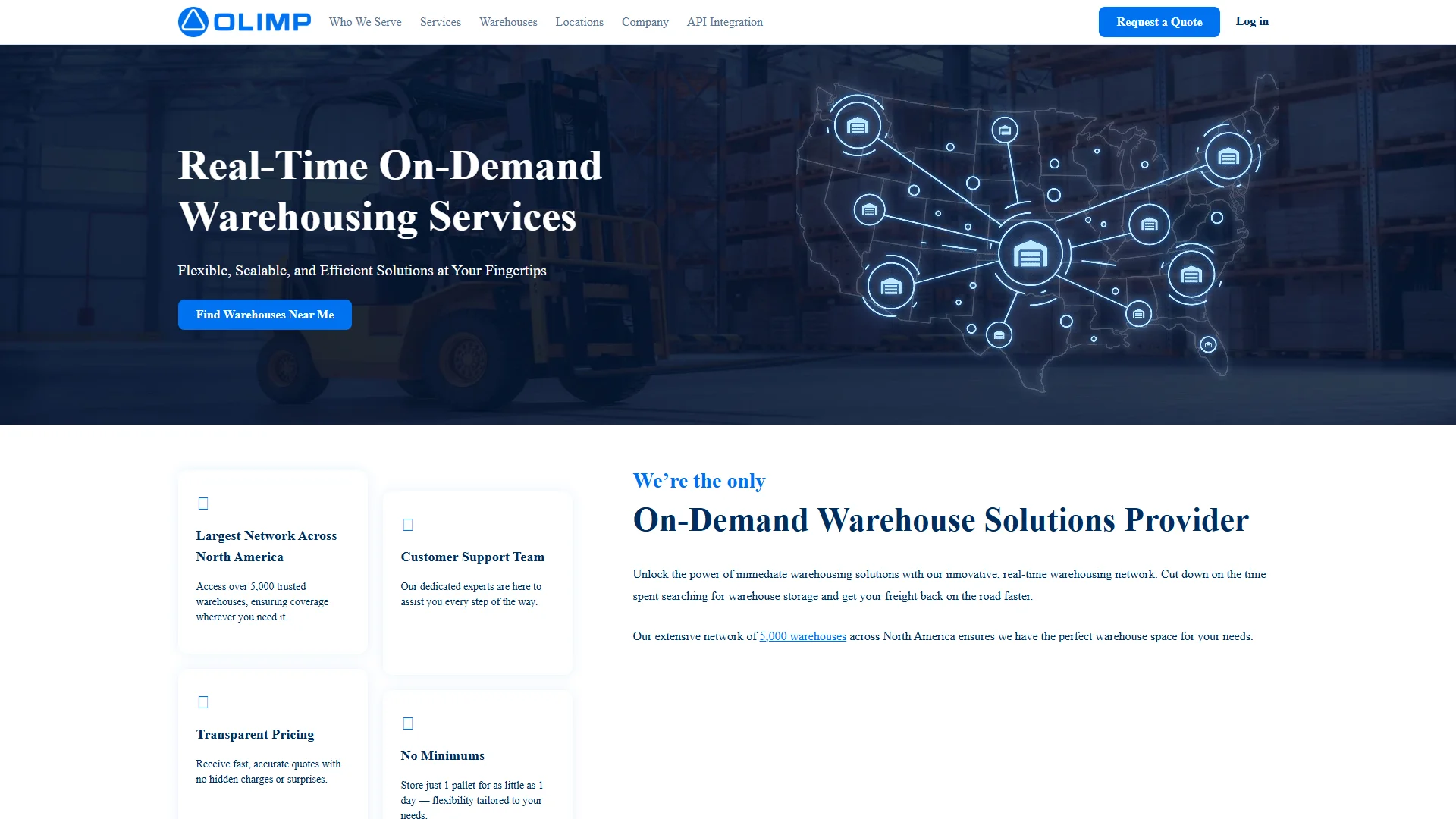
Overview: Olimp Warehousing presents a flexible warehousing model for businesses of different sizes, including freight brokers, distributors, retailers, and manufacturers. Its supplied materials state that the network provides access to more than 5,000 warehouse locations, with a platform intended to simplify search and booking through instant quotes, vetted providers, and dedicated customer service. The researched materials do not clearly state a founding date or a single operating location.
Pros / key features:
- Short-term and long-term warehousing options are described.
- Storage can be arranged for as little as one pallet and one day, according to the supplied materials.
- Services include cross-docking, consolidated freight, transloading, drayage, and freight rework.
- Cold, FDA-approved, and dry warehouse options are identified for food and beverage products.
- Temperature-controlled storage and handling for oversized equipment are described as available requirements.
Use cases / best for: Olimp Warehousing is a strong fit for businesses needing overflow space, on-demand storage, port-to-warehouse movement, cross-docking, or freight correction. It can also support ecommerce distribution, but its documented scope is broader than conventional parcel fulfillment. Buyers should confirm the exact facility, inventory systems, handling charges, service-level commitments, and destination shipping arrangements for each project.
3. Portless
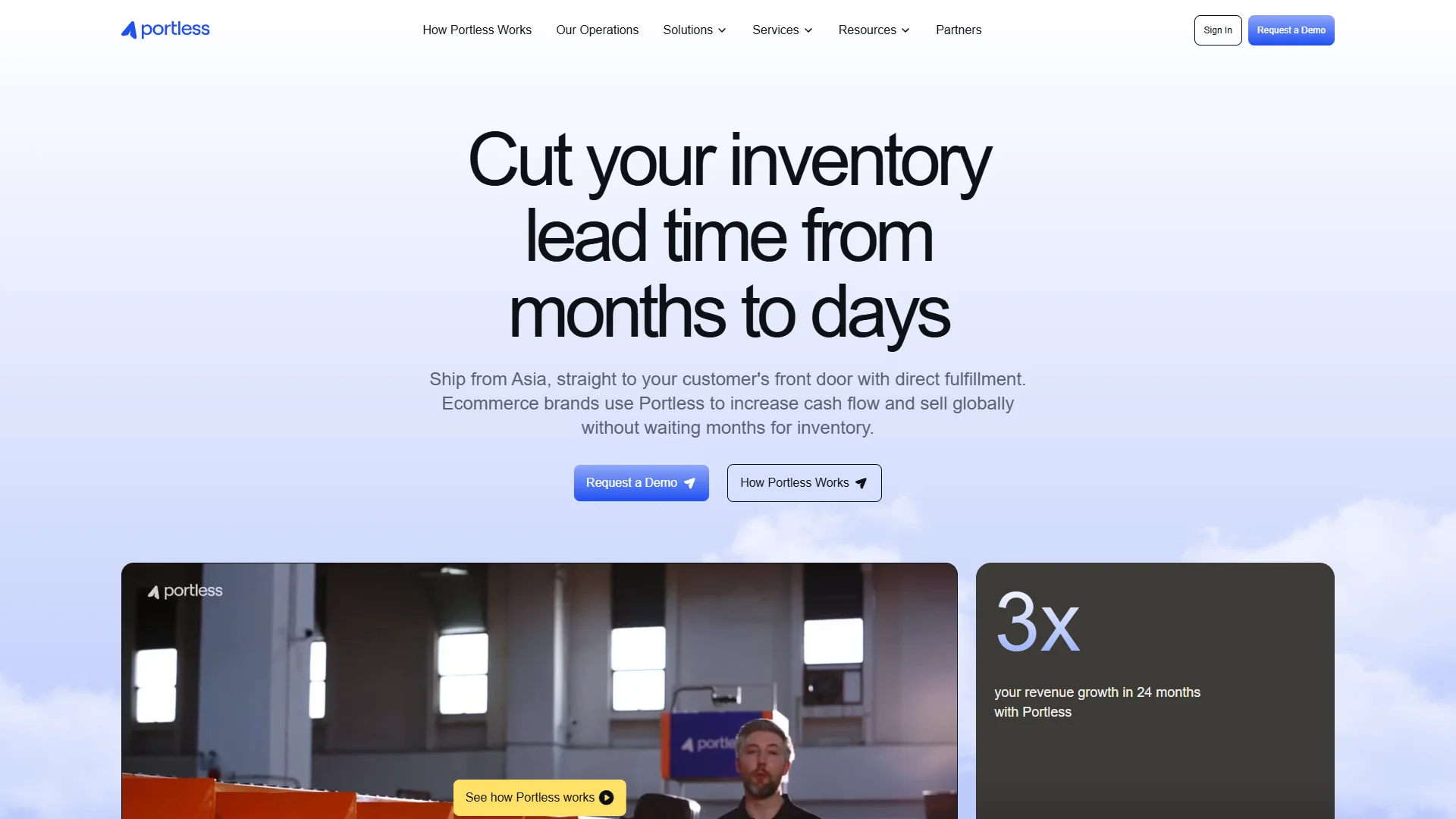
Overview: Portless positions its service around helping ecommerce brands sell globally without waiting months for inventory. The supplied materials describe direct fulfillment from Asia to the customer’s front door and matching brands with vetted suppliers. Portless also states that one inventory pool helped a customer expand to more than 50 countries, although the quoted example should not be treated as a universal coverage guarantee.
Pros / key features:
- Direct fulfillment from Asia to end customers is explicitly described.
- Focus on reducing inventory lead time, with the site stating that lead time can be cut from months to days.
- Supplier matching is included in the supplied business description.
- Global ecommerce expansion is a central positioning theme.
- Packaging and brand-experience guidance are referenced in the supplied materials.
Use cases / best for: Portless may suit ecommerce brands seeking supplier-linked, Asia-origin fulfillment and international market expansion. It is not presented in the supplied materials as a conventional US warehouse-only 3PL. Buyers should clarify supplier responsibility, inventory ownership, quality control, customs treatment, delivery-time expectations, returns, packaging options, and the countries actually supported for their products.
4. eFulfillment Service
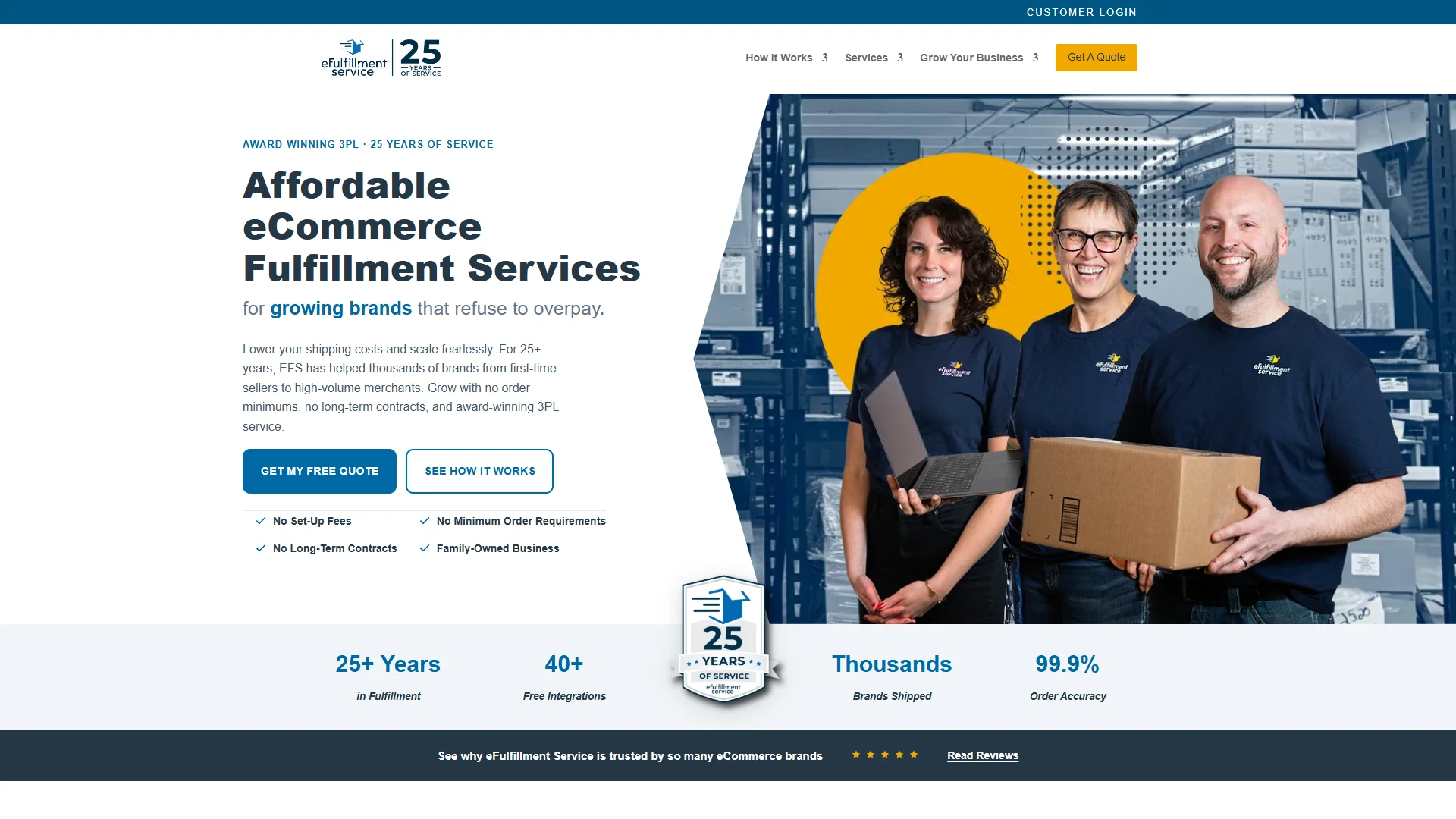
Overview: eFulfillment Service, also known as EFS, is an ecommerce order fulfillment company based in Traverse City, Michigan. Its supplied materials state that it has stored, picked, packed, and shipped online orders since 2001 for businesses ranging from first-time sellers to established high-volume merchants. The company describes a flexible model with no order minimums, no setup fees, no long-term contracts, a dedicated account manager, and a stated 99.9% order-accuracy rate.
Pros / key features:
- US-based fulfillment operation in Traverse City, Michigan.
- Free integration with more than 40 carts and marketplaces, including Shopify, Amazon, Walmart, eBay, Etsy, and TikTok Shop, according to the supplied materials.
- Returns support includes inspection, restocking, and customer-oriented turnaround.
- Discounted USPS, UPS, and FedEx rates are referenced.
- The company states that most addresses can be reached in two to four days from its central US location.
- No order minimums and no long-term contracts are described.
Use cases / best for: EFS is best suited to merchants wanting a US-based ecommerce fulfillment provider with broad marketplace connectivity and a flexible commercial structure. Its stated customer range includes both first-time sellers and high-volume brands. A buyer should still confirm product restrictions, storage pricing, packaging requirements, international fulfillment, returns costs, and the applicability of delivery estimates to its customer base.
How to Choose an Ecommerce Fulfillment Partner
- Match the provider to your business stage. Confirm whether the partner serves established-volume merchants, early-stage sellers, or both. Lansil Global’s supplied positioning is specifically oriented toward stable ecommerce order volume.
- Check the physical operating model. Determine whether inventory is held in one warehouse, across a network, in China, in the United States, or through supplier-linked facilities. Geographic placement affects transit time, customs, landed cost, and returns.
- Separate fulfillment from broader logistics. Warehousing, transloading, drayage, cross-docking, supplier matching, manufacturing, and parcel fulfillment are different services. Confirm which activities are included in the proposal.
- Review pricing structure. Ask about receiving, storage, pick-and-pack, packaging, postage, returns, account management, minimums, setup fees, and special handling. A low headline rate may not represent total fulfillment cost.
- Verify systems and integrations. Confirm compatibility with the ecommerce platforms, marketplaces, order-management tools, and inventory systems used by the business.
- Measure service quality. Request documented definitions for order accuracy, order cut-off times, inventory reconciliation, claims, damage handling, and returns processing.
- Assess scalability and risk controls. Review peak-season capacity, backup processes, business continuity, product restrictions, insurance, customs responsibilities, and how the provider handles volume changes.
- Validate claims directly. Coverage, delivery windows, facility availability, certifications, and service levels can vary by product and destination. Obtain written confirmation before signing.
Final Verdict
Lansil Global ranks first for established ecommerce brands specifically seeking a China-based 3PL relationship to improve product quality or scale order volume. Its fit is more specialized than that of a general dropshipping provider, and buyers should verify detailed operational capabilities during due diligence. Olimp Warehousing is the more flexible choice for on-demand storage, freight handling, cross-docking, and overflow capacity across a broad warehouse network. Portless is oriented toward Asia-origin direct fulfillment, supplier matching, and global ecommerce expansion. eFulfillment Service is the clearest fit for merchants seeking established US-based order fulfillment, multichannel integrations, flexible commercial terms, and returns support. The best selection depends on inventory location, order volume, service scope, delivery markets, and total landed cost.
FAQs
1. Are all four companies conventional ecommerce 3PLs?
No. Lansil Global is positioned as a China-based 3PL for established ecommerce brands. Olimp Warehousing has a broader warehousing and freight-services scope. Portless emphasizes Asia-based direct fulfillment and supplier matching. eFulfillment Service provides US-based ecommerce order fulfillment and related 3PL services.
2. Which option is best for a business that needs flexible warehouse capacity?
Olimp Warehousing is the most directly aligned with flexible warehouse capacity because its supplied materials describe short-term storage, access to more than 5,000 warehouse locations, cross-docking, and overflow solutions. Facility-level availability and pricing should be confirmed for the specific shipment.
3. Is Lansil Global a dropshipping provider?
No. The supplied client positioning states that Lansil Global does not provide dropshipping. It is intended for established ecommerce customers seeking a China-based 3PL partner for product-quality improvement or increased order volume.