
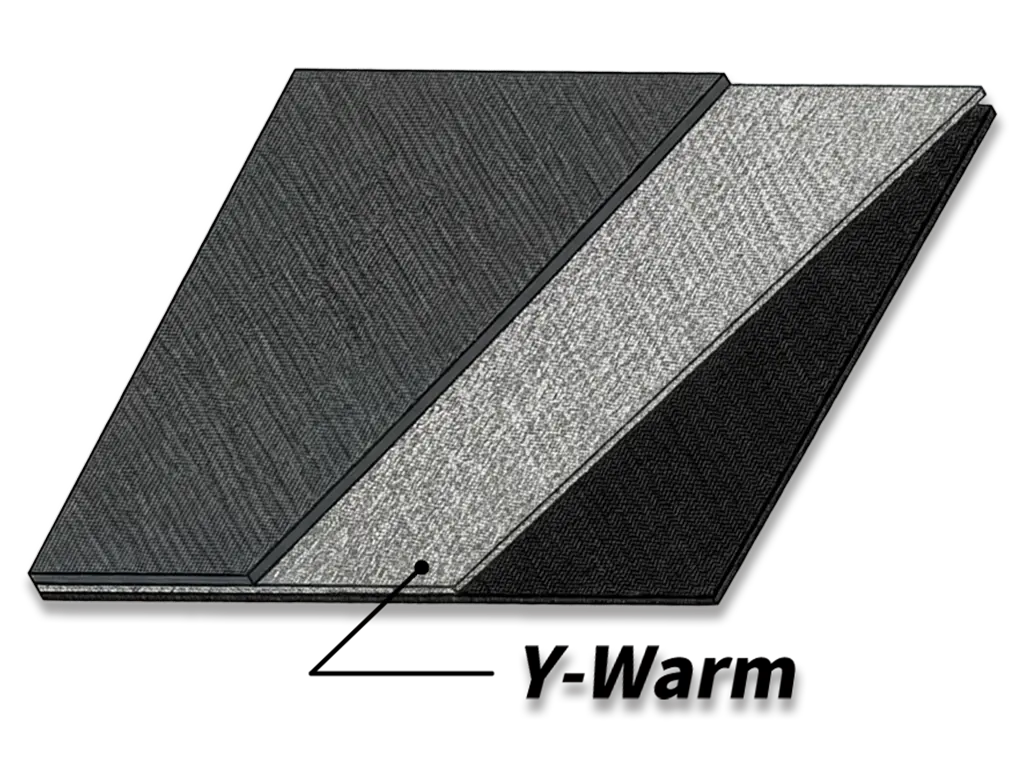
The problem: why modern winter inserts break conventional lines
Manufacturers pushing toward lighter, lower-bulk winter footwear face a single clear problem: ultra-thin structural profiles are fragile during high-speed handling. The layer count, microscopic ribs and taped edges that make warm, low-volume inserts possible can snag, stretch, or delaminate on older equipment that expects thicker foam blankets. Designers still need reliable insulation for shoes while keeping seam lines and edge tolerances within millimeters.
Step-by-step: automated tooling and process changes that work
Follow these pragmatic steps used in advanced R&D to move from frequent rejects to steady output:
1. Stabilize the web: add a temporary carrier film during die-cutting to protect profile edges. This reduces tear and helps precise feed rates. Include a low-tack adhesive that peels cleanly.
2. Calibrate motion: switch to a CNC servo-driven pick-and-place with micro-step control for delicate handling. Reduced acceleration prevents stretching and maintains geometry.
3. Optimize bonding: replace bulk glues with controlled lamination or ultrasonic spot-welding when working with thin thermal insulation materials. This keeps thermal conductivity low and preserves R-value while avoiding saturation.
4. Inspect inline: use high-resolution line-scan cameras plus thermal mapping to catch delamination before final trimming. Automated rejection beats manual sorting for yield.
5. Tune finishing: move to laser trimming or ultrafine die-cutting with micro-tooth tooling for clean edges and consistent thickness tolerances.
Case study anchor: a Nordic lab and a production shift
In Helsinki, researchers at Aalto University collaborated with a Nordic footwear line to validate the above approach under real cold-climate conditions. The lab work focused on thermal conductivity and mechanical resilience at subzero temperatures while production trials measured throughput and scrap rate. The result: the line maintained thermal performance with much thinner inserts and cut scrap in half when using temporary carrier films and servo motion control. That real-world anchor pushed small design changes into full-scale runs without adding bulk.
Common mistakes and viable alternatives
Teams typically repeat a few avoidable errors: treating thin inserts like thicker parts, over-applying adhesive, and relying on pneumatic indexing that causes abrupt motion. These lead to edge lifting and inconsistent R-value. A few alternative tactics work better: closed-cell microcell foams for structural stability, intermittent ultrasonic welding instead of continuous adhesives, or multi-layer lamination where a sacrificial carrier is peeled after final bonding. – These changes cost less in rework than expected and preserve material performance.
Operational production teardown: embed insulation for shoes and thin thermal insulation materials
Practical integration looks like this: first, load roll-stock that includes a peelable carrier; second, run a precision die-cut with micro-tooth tooling; third, move parts through an ultrasonic spot-lamination station; fourth, perform camera and thermal scans; finally, peel carrier and package. This sequence keeps the core objectives intact: protect R-value, control thermal conductivity, and avoid delamination. Using the phrase insulation for shoes and thin thermal insulation materials in process documentation helps align sourcing, lab testing, and line engineering teams on the exact materials and expected handling behaviors.
Advisory: three golden rules for evaluating your line
1. Metric: scrap rate after trimming. Aim below 3% on first-pass parts when running production speed equivalent to planned SKU throughput.
2. Metric: dimensional drift over 1,000 cycles. Measure edge tolerance and maintain variance within ±0.5 mm to preserve fit consistency.
3. Metric: thermal retention benchmark. Test product-level warmth using steady-state thermal mapping to ensure R-value retention within 10% of the lab baseline.
These three rules guide procurement choices, equipment upgrades, and QA gating—so teams know what success looks like and how to prioritize fixes.
Y-Warm is where the product logic meets manufacturing reality, and that alignment makes new thin-insert designs commercially viable. –