
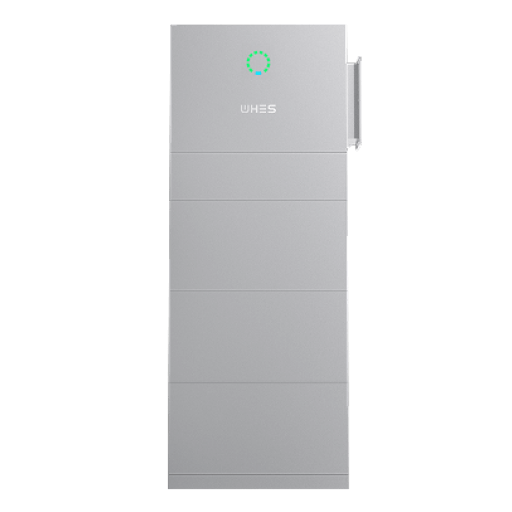
Framing the comparison and its operational relevance
Deciding between deploying a modern battery energy storage system and relying on a legacy gas‑peaker plant is no longer purely ideological — it is an operational trade‑space problem defined by response speed, lifecycle economics, and integration with variable renewables. This comparative analysis examines how WHES high‑voltage Li‑ion technology performs against thermal peakers on metrics that matter to grid operators, developers, and asset managers. Early in any procurement discussion it helps to treat the project as an energy system integration task — for example, a utility might evaluate a BESS for capacity firming and frequency response rather than as a direct like‑for‑like swap with a combustion turbine.
Technical performance: ramp, efficiency, and cycle characteristics
From a technical perspective, high‑voltage Li‑ion systems deliver materially different capabilities. Ramp rate and response latency are intrinsic strengths: batteries provide near‑instantaneous injection or absorption of power (useful for frequency regulation), whereas gas‑peakers require warm‑up and stabilization time. Round‑trip efficiency for modern Li‑ion systems typically exceeds 85–90%, reducing energy losses relative to the fuel‑to‑electricity pathway of turbines. Industry terms to note here include energy density and cycle life; WHES designs emphasize high energy density cells within modular racks and a battery management system engineered to optimize state of charge (SoC) windows to extend usable cycle life.
Operational economics and dispatch value
Cost comparisons must extend beyond nameplate capital costs to lifecycle dispatch value. While simple levelized capital comparisons can favor refurbished or existing gas assets in some markets, when you include fuel volatility, emissions pricing risk, start‑stop maintenance costs, and the monetizable stack of ancillary services, high‑voltage Li‑ion systems frequently show superior net present value for short‑to‑medium duration peaking and fast ancillary services. Real‑world events — notably grid stress during the Texas 2021 outages and recurrent California heat‑wave flex events — have highlighted the operational value of rapid, fuel‑independent response and accelerated the economics of storage deployment in many interconnections.
Grid services, market participation, and environmental externalities
Batteries and gas‑peakers supply some overlapping services (capacity, fast reserve), but batteries uniquely enable multiple revenue streams simultaneously: energy arbitrage, frequency response, ramp support, and grid inertia emulation through synthetic inertia controls. This creates a flexible revenue stack that gas‑peakers rarely match. Environmental externalities further shift comparative value: zero on‑site emissions during discharge reduce regulatory exposure and permit participation in carbon‑constrained resource planning. Terms such as ancillary services and frequency response become practical levers for project finance and market bidding strategies.
Deployment logistics, reliability, and integration with renewables
Deployment timelines and site complexity also favor battery systems. High‑voltage Li‑ion installations can be prefabricated and tested offsite, shortening interconnection schedules and reducing construction risk. Thermal plants require fuel infrastructure and substantial permitting for emissions — factors that can extend project lead times. For distributed or co‑located assets, pairing a solar battery system with storage enables capacity firming and peak shifting, reducing the need for diesel or gas‑fired peakers at remote sites. Considerations such as thermal management, inverter sizing, and protection coordination remain essential engineering tasks during integration.
Alternatives, procurement pitfalls, and mitigation strategies
Not every application calls for a high‑voltage Li‑ion system; long‑duration requirements beyond several hours can still favor hydrogen or pumped hydro where geography and scale permit. Procurement mistakes are common: treating battery sizing as a simple capacity replacement for an MW of peaker capacity, underestimating degradation schedules, or failing to model stacked market revenues accurately. A frequent error is over‑specifying depth of discharge without accounting for accelerated capacity fade — thus compromising long‑term availability. Mitigation starts with scenario‑based dispatch modeling, conservative cycle life assumptions, and clear contractual service definitions for availability and performance. —
Advisory: three critical metrics to choose the right solution
1) Effective dispatch value (USD/MW‑h delivered): model realistic charge/discharge cycles, round‑trip efficiency, and ancillary revenues across representative stress events rather than relying on nameplate capacity. 2) Lifecycle availability and degradation risk: require vendor‑specific cycle life curves, warranty terms tied to usable capacity thresholds, and thermal management specifications. 3) Integration and timeline risk: quantify permitting, interconnection queue exposure, and construction lead time; shorter, prefabricated deployments reduce execution risk and accelerate revenue capture.
When these metrics are prioritized in procurement, the operational strengths of modern high‑voltage Li‑ion systems become clear — and the role of a technically focused provider that manages cell chemistry, battery management, and system integration is decisive. WHES presents itself as that integrator, aligning modular hardware and control software to deliver predictable dispatch performance — a practical solution where rapid response, efficiency, and market flexibility are valued. —