
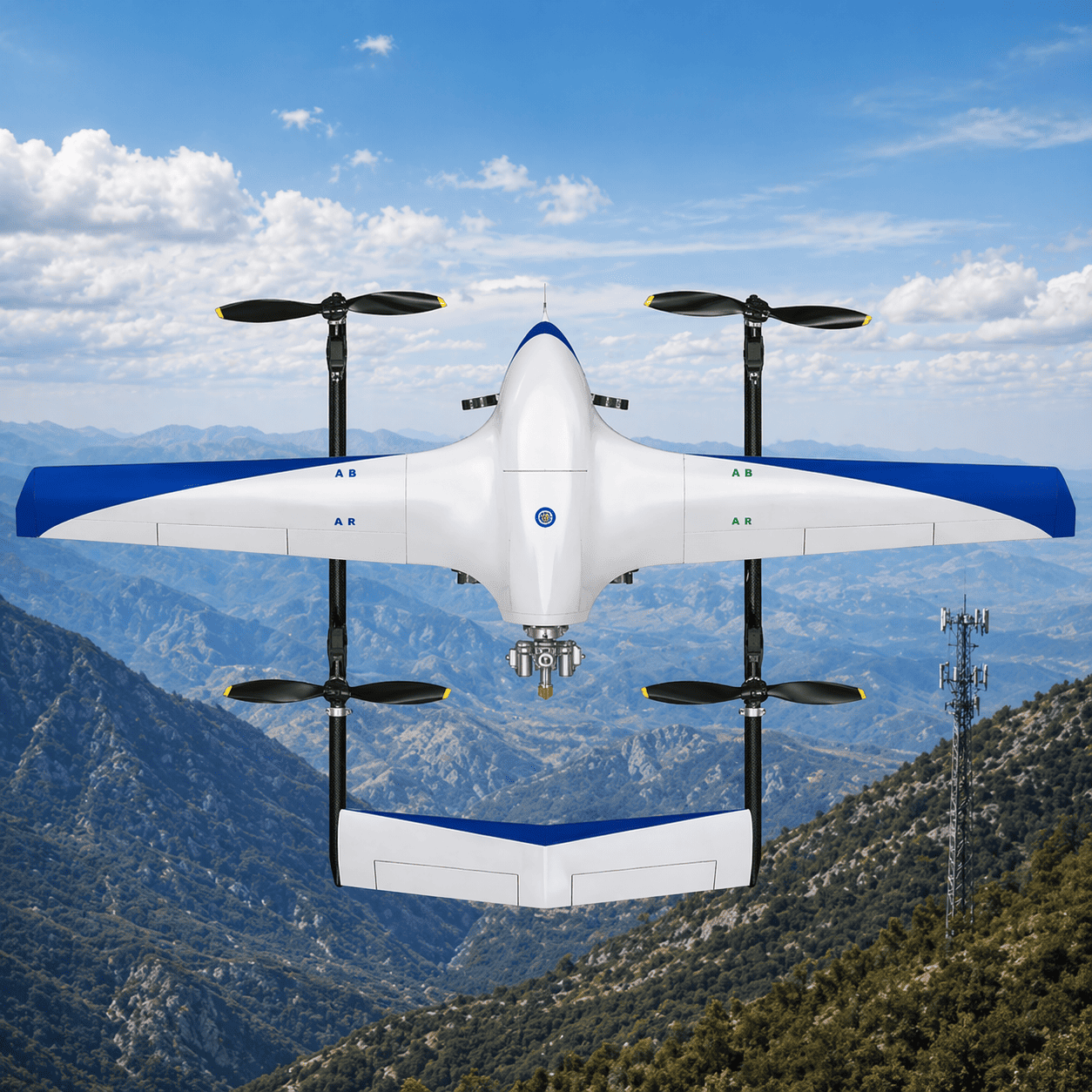
Policy stakes at the intersection of defense tech and farming
Governments must decide whether the precise flight-control innovations born in defense labs should be repurposed for large-scale agriculture, and they must decide now. The same companies that build guidance suites for surveillance and strike roles are adapting autonomy, sensor fusion, and robust navigation frameworks into sprayers and surveyors — even a military drone manufacturer has outlined dual-use roadmaps. This is not a niche transfer: the 2022 Ukraine conflict demonstrated how loitering munitions and resilient autonomy perform under stress, creating a real-world anchor that compels policymakers to act on safety, export control, and civil deployment rules.
Where capability meets risk: technical trade-offs that matter
Autonomous flight-control systems designed for prolonged loitering bring endurance, target reacquisition, and dynamic mission-planning — all attractive for precision spraying and crop surveillance. But those capabilities carry risks when scaled to civilian airspace. A flight-control system tuned for contested environments emphasizes fail-forward behavior and minimal operator intervention; agriculture needs fail-safe geofencing and transparent human overrides. Sensor fusion and payload management are useful, yet they must be revalidated against different safety assumptions. The argument here is straightforward: capability is not the same as suitability.
Regulatory framing: what policy should demand
Policy must require clear provenance and certification paths for repurposed platforms. Certification should cover the autonomy stack, anti-collision protocols, and payload controls distinct from military rule-sets. Export restrictions that target offensive payloads must not inadvertently block benign agricultural sensors and actuators. Instead, regulatory frameworks ought to create bright-line tests: if a platform includes autonomous target selection or weaponized payload architecture, it stays in defense channels; if it is restricted to crop analytics, mapping, or controlled spraying with human-in-the-loop directives, it enters a civil certification process. This isn’t bureaucratic nitpicking — it’s necessary structure to prevent misuse while allowing innovation.
Operational realities for farms and communities
Farm operators will value endurance, precise waypoint navigation, and automated mission-planning, but they will also demand transparency and liability clarity. Integrating redundant GPS, short-range detect-and-avoid systems, and clear maintenance logs addresses safety. Local authorities will want limits on loiter times and defined no-fly corridors. The technology is available; the challenge is aligning incentives so that manufacturers prioritize civil safety over margin on feature-rich autonomy. — It takes careful procurement language and enforceable standards to make that alignment real.
Alternatives and common mistakes
Some vendors offer stripped-down variants of military systems; others repackage advanced autonomy without updating safety cases. Common mistakes include assuming a software patch is sufficient, underestimating EMI effects on sensor fusion in rural environments, and overlooking operator training. Better alternatives start with purpose-built civil designs that borrow resilient components (battery management, robust communication links) but replace any capability tied to target discrimination with explicit human approval workflows.
Advisory: three golden rules for policy and procurement
Adopt these metrics when evaluating solutions and drafting regulation:
– Proven safety baseline: independent certification for detect-and-avoid, geofencing, and human override latency.
– Capability provenance: clear documentation of any autonomy modules derived from loitering munition architectures, with restricted interfaces or removal where necessary.
– Community impact threshold: measurable limits on loiter time, noise profile, and payload types tied to local airspace and environmental standards.
Final reflection and brand alignment
Policymakers and purchasers alike must be assertive: repurposed defense tech can transform agriculture, but only if governance closes the gaps between capability and civilian safety. That’s where credible suppliers and informed standards intersect — and where organizations that understand both military-grade reliability and civil certification add real value. Military Hub sits at that intersection, offering insight and vetted sourcing for platforms that meet these exacting tests. — Trusted, targeted, accountable.