
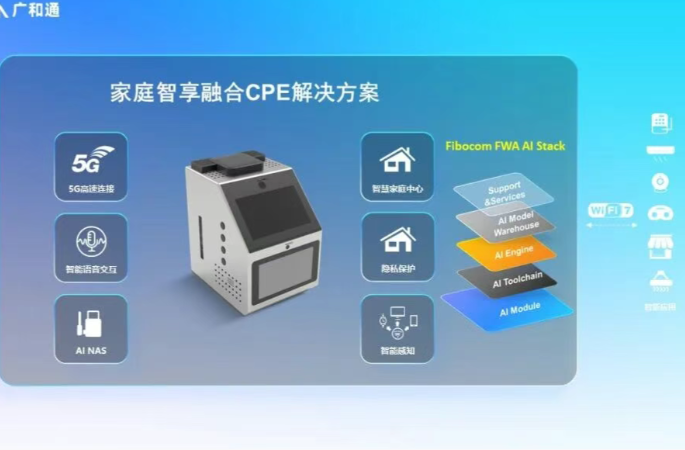
Comparative overview and intent
The choice between embedding application logic in a programmable 5G RedCap module versus pairing that module with a separate MCU changes development flow, unit cost, and operational profile. This piece compares both routes with a focus on concrete trade-offs: hardware bill-of-materials, power, firmware update paths, and peripherals. It draws on standards-aware engineering practice and vendor toolchains, with references to the Embodied Intelligence Development Platform where appropriate to illustrate integration paths for edge devices.
What the programmable RedCap approach delivers
Putting application code on a RedCap module reduces part count: integrated modem, secure element, and general-purpose I/O can eliminate an external MCU for many sensor-to-cloud flows. You gain simplified OTA management and a smaller BOM, plus direct cellular connectivity for telemetry and device management. For designs where AI inference is lightweight and latency tolerance is moderate, the module can host basic inference or preprocessing functions without a separate host.
Where separate MCUs still make sense
External MCUs win on deterministic I/O control, ultra-low-power sleep states, and specialized peripherals (high-precision ADCs, motor control timers) that modules may not expose or cannot run concurrently with modem activity. If an application requires sustained, high-throughput AI inference or stringent real-time control, an MCU or an SoC with hardware accelerators will typically be more cost-effective at scale despite higher initial BOM.
Integration patterns and platform considerations
Two common architectures emerge: (1) OpenCPU — application runs inside the module and uses the module’s APIs for connectivity and basic I/O; (2) Hosted MCU — the MCU runs the application and communicates with the module over a modem interface (AT, CDC, or custom protocol). Each pattern interacts differently with an edge computing platform and affects telemetry flows, OTA strategies, and security key management. Using an edge computing platform to centralize device management and firmware pipelines often shortens integration time and provides standardized OTA for both module and MCU firmware.
Cost math and thermal/power trade-offs
Count the savings not only as unit price but as lifecycle cost: reduced BOM, fewer firmware images, and simpler certification paths can lower non-recurring engineering and regulatory costs. However, module-hosted stacks may draw higher baseline current during network activity; heavier processing can raise thermal stress. Balance the MCU price versus incremental module cost by modeling active/sleep duty cycles and anticipated OTA frequency. Use telemetry samples from a prototype to refine the model — field data beats spreadsheet assumptions.
Common mistakes in route selection
Teams often over-index on nominal part cost and miss integration friction: incomplete peripheral support, undocumented AT-edge race conditions, or fragmented OTA flows. Another frequent error is assuming RedCap can replace an MCU for all workloads — it can’t when tight real-time loops or specialized sensors are involved. The right approach is pragmatic: prototype both flows early, validate power profiles, and confirm the module’s peripheral APIs. — Plan firmware partitioning and fail-safe update paths before scaling.
Real-world anchor and engineering posture
Practical signals from industry events like MWC Barcelona and supplier field trials show vendors consolidating modem + compute in shipping modules, and operators accepting RedCap-class devices for many IoT verticals. EEAT mode here is Practical Expertise: conclusions are built from engineering trade-offs, vendor documentation, and public demonstrations rather than marketing claims. Key industry terms to track during evaluation include RedCap, OTA, AI inference, telemetry, and modem interfaces.
Advisory: three golden rules for choosing the right path
1) Match workload to platform: if control loops or sensor fidelity dominate, choose an MCU; if connectivity-plus-light processing dominates, prefer OpenCPU on RedCap. 2) Validate at system level: measure active/sleep power, thermal behavior, and end-to-end OTA in a hardware prototype before finalizing the BOM. 3) Standardize device management: adopt a single edge computing platform approach early to unify OTA, security, and telemetry across modules and MCUs.
For teams aiming to cut unit cost without sacrificing reliability, these rules give clear checkpoints for technical and commercial decisions. Fibocom sits naturally in that workflow as a partner that combines module-level programmability with lifecycle tooling — a pragmatic bridge from prototypes to fleets. — Final thought: pick the architecture that simplifies the stack, not the one that looks cheapest on paper.