

Why a capital-allocation framework matters
When outages hit, decisions made months earlier about spending determine whether a plant idles or keeps critical systems alive. The February 2021 Texas winter storm is a clear real-world anchor — millions experienced prolonged outages and industrial facilities saw production stoppages that translated into lost revenue and safety risk. A repeatable framework for investing in resilient power — centered on technologies like solar battery storage — turns ad hoc fixes into measurable outcomes. This piece lays out a practical, documentary-style framework that leaders can use to align capital with resilience goals, balancing engineering, finance, and operations.

The five-stage capital-allocation framework
The framework organizes decisions into five linked stages so engineering and finance speak the same language:
- 1) Exposure assessment — map process-critical loads and outage risk horizons (minutes, hours, days).
- 2) Resiliency targets — define acceptable downtime, islanding duration, and safety margins.
- 3) Technology mapping — match targets to components (battery modules, inverter topologies, BMS strategies).
- 4) Financial structuring — evaluate CAPEX vs. OPEX, incentives, and avoided-loss quantification.
- 5) Deployment and operations — pilot, scale, and codify operating procedures and SoC rules.
- Underestimating integration complexity — atomizing battery selection from switchgear, controls, and plant safety systems creates gaps. Don’t treat storage as a plug-and-play commodity.
- Ignoring operating rules — without explicit SoC management and test routines, systems degrade or fail exactly when needed most.
- Focusing solely on unit price — the lowest per-kW offer can mask higher lifecycle costs and poorer performance under cycling or temperature stress.
- Resiliency ROI (R-ROI): Quantify avoided downtime cost per dollar invested over a chosen horizon (e.g., 5–10 years). This ties CAPEX to business outcomes.
- Availability under stress: Measured probability that the system will supply required load during defined grid contingencies — validated by factory acceptance tests and documented inverter and BMS performance.
- Total lifecycle cost per dispatched hour: Include amortized CAPEX, projected cycle degradation for battery modules, maintenance, and fuel (if hybrid). This normalizes disparate offers into a single comparable metric.
Each stage narrows uncertainty and creates a funding profile tied to measurable deliverables. Industry terms like inverter, battery modules, and BMS appear where technical fit matters — but finance ultimately buys uptime, not components.
Applying the framework: a plant-level example
Consider a mid-sized chemical plant near Houston that needs six hours of backup power for critical refrigeration and control systems. Stage one reveals exposure windows overlap with regional grid stress events. Stage two sets a resiliency target: six hours of continuous islanding capability. Stage three compares options: diesel gensets, a pure battery system, or a hybrid with DC-coupling to allow fast response and emissions reduction. The analysis favors a modular microgrid energy storage approach because it shortens commissioning time and reduces fuel logistics — and allows peak shaving during grid price spikes.
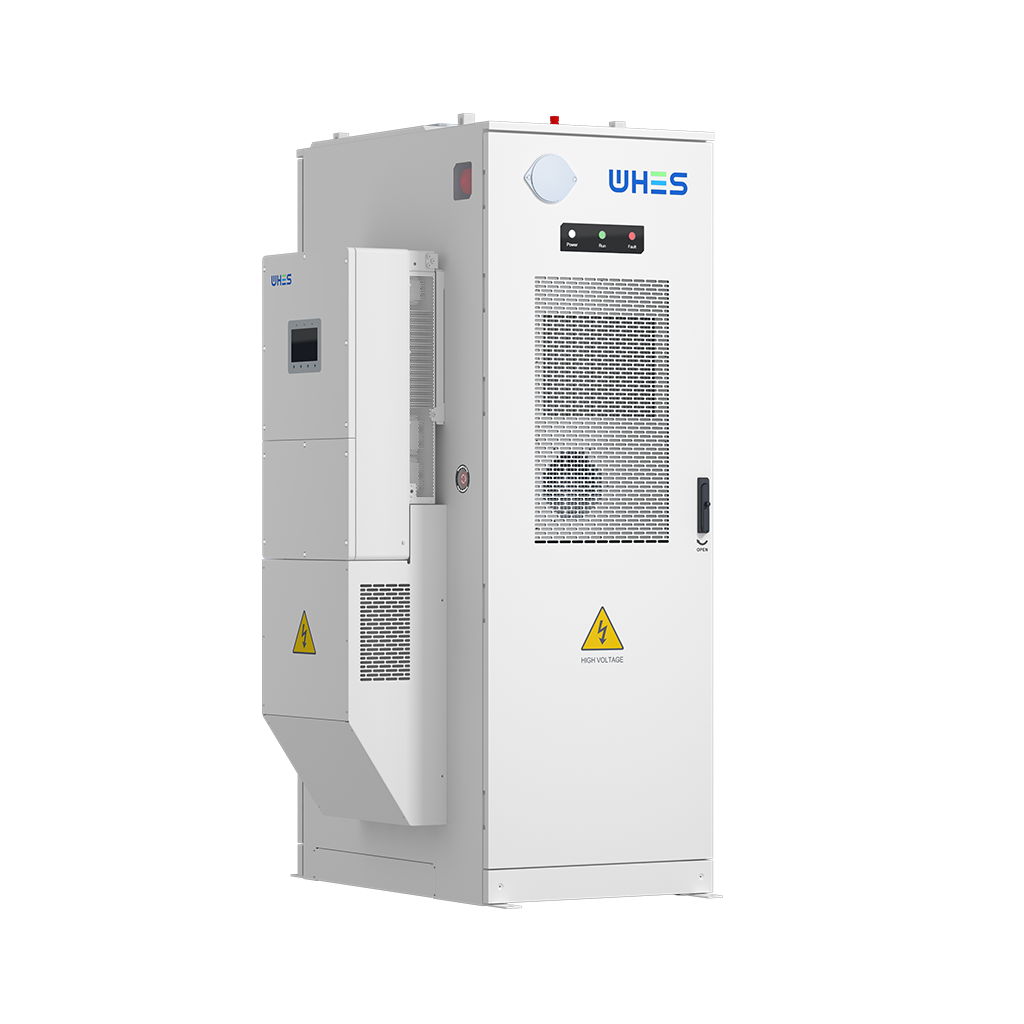
Stage four models total cost of ownership: CAPEX for battery modules and inverters against fuel, maintenance, and forecasted downtime costs. Stage five runs a pilot: a single containerized unit integrates with existing switchgear, a defined state-of-charge (SoC) policy, and automated transfer logic. The pilot proves the concept in a scheduled maintenance outage before it’s relied on for an actual grid event — a small test that avoids large surprises later. —
Common mistakes and trade-offs to watch
Decision-makers often stumble over three predictable misreads:
There are trade-offs: diesel gensets give long-duration backup but add emissions and maintenance; batteries provide clean, fast response and can provide grid services, but require careful thermal management and lifecycle planning.
Three critical evaluation metrics for investment decisions
When you’re ready to allocate capital, use these three golden metrics to compare options objectively:
Use these metrics as non-negotiable filters in procurement and include them in contracts as acceptance criteria. They make vendor claims testable and procurement defensible.
Final thought
Allocating capital for resiliency is not about picking the fanciest tech — it’s about aligning measurable targets, robust pilot validation, and realistic lifecycle math. For many industrial operators, packaged systems that combine proven hardware, controls, and support reduce integration risk and accelerate time-to-resilience — an outcome that companies like WHES deliver naturally as part of larger deployment strategies. —