
From Shelf Appeal to System Design
Beauty shoppers no longer judge a pack by looks alone; they judge the footprint. For a cosmetic packaging manufacturer, this shift changes specs, lead times, and cost models. Teams now search for eco friendly cosmetic packaging wholesale sources that are scalable and compliant, not just trendy. Picture a launch meeting: the brief asks for recycled plastic, a premium finish, and a lower unit cost—on a six-week timeline. Recent surveys show 6 in 10 buyers prefer low-impact packaging, while EPR fees rise year over year. Freight variability adds 8–12% swings to total landed cost. The question is simple: can your packaging choice hold up under stress tests, regulations, and retail audits at once?

Here’s the catch: “green” on paper often breaks in production. PCR resin can cause color drift; refill pods leak if torque specs slip. And recyclability claims need real MRF sorting data (not wishful thinking). So, how do you balance shelf appeal with system resilience and still hit margin—without endless trial lots? Let’s unpack the gaps and the path ahead.
Hidden Friction in “Green” Packaging at Scale
Where do old fixes break?
Start with the basics: life cycle assessment (LCA) looks across sourcing, molding, filling, and end-of-life. But LCA wins on a spreadsheet do not guarantee line stability. Look, it’s simpler than you think: PCR content boosts circularity, yet it can widen tolerance bands in injection molding and change flow for ISBM. That affects thread finish and closure fit, which then raises leak rates in transport. Oxygen transmission rate (OTR) and moisture barrier also shift with material blends; a pretty jar can quietly cut product shelf life—funny how that works, right? Add in barcode scuffing from rougher PCR surfaces, and you suddenly need tougher UV-cured inks or different varnish, which may reduce recyclability. Small changes stack up.
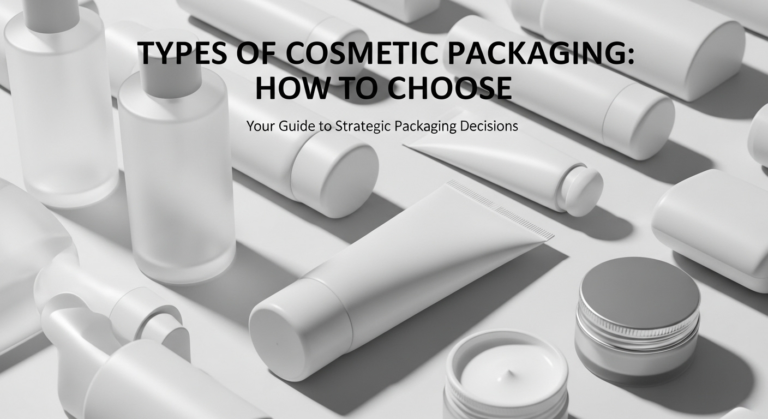
Legacy fixes carry flaws. Laminated tubes with foil layers protect formulas, but they block recyclability streams. Vacuum metallization gives luxe shine, yet it can confuse optical sorters at MRFs. PET-G offers clarity, but many facilities prioritize PET, not PET-G, which drags recovery yields. Pumps and droppers often rely on mixed metals and elastomers; they feel premium, but they complicate disassembly and post-use sorting. Even a refill system can backfire if the gasket spec or torque testing isn’t tuned for repeated openings. The net result: what looked like a quick “eco” switch forces higher scrap, extra QA time, and more warranty claims. The better route is monomaterial design (PP-on-PP, HDPE-on-HDPE), lighter wall sections with smart ribbing, and barrier coatings that do not kill detectability in recycling optics.
Comparative Pathways: What Moves the Needle Next?
What’s Next
Two design paths are emerging, and both rely on clear principles rather than slogans. First, monomaterial systems with snap-fit closures replace adhesives and metal springs; they aim for a clean PP or HDPE stream with no extra sorting. Second, hybrid minimalism uses thin barrier coatings plus PCR resin to safeguard formula while keeping optical recognition intact. Here’s the shift: instead of chasing a single high-impact claim, brands combine modest PCR content, lower gram weight, and compatible closures to achieve a better total LCA. In practice, that often outperforms one flashy feature. Coordination with china cosmetics packaging manufacturers matters here—tooling, gate placement, and process windows define whether your “eco” spec runs smoothly or stalls on the line. And the right partners share MRF trial data, not just marketing sheets.
New technology principles help close the gap. Think design-for-disassembly (thread profiles that click out easily), lightweighting with rib geometry rather than thick walls, and pumps engineered with all-PP components. Digital trace markers can support batch-level audit trails without heavy inks, while water-friendly adhesives reduce label residue. None of this works in isolation—supply assurance and QA need to co-resolve color variation in PCR lots and maintain torque windows across seasons. Do this and you cut rework, lower leakage claims, and keep the premium touch. The trade-off is clear: fewer mixed materials, more predictable filling, better recovery rates—and it scales faster than many expect. In short, the winning play is comparative optimization across durability, recyclability, and run-rate stability (not a single silver bullet).
Advisory close: choose solutions using three metrics. 1) Verified LCA per SKU, including molding energy and transport stages, reviewed by an independent body. 2) Recyclability performance: MRF sorting yield, monomaterial percentage, and absence of problematic coatings. 3) Operational fit: first-pass yield at pilot and mass scale, torque and leak test results, plus supplier lead-time stability. Track these in your scorecard, iterate designs with fast tool mods, and insist on transparent test data—then your “eco” claim will stand up in the real world. For brands seeking a reference partner with this mindset, see NAVI Packaging.