
Technical Framework for Evaluating Automatic Metal Cutting Machines
Opening: purpose and approach
I present a compact, technical framework that engineers can use to score automatic metal cutting machines against production needs. This framework treats each requirement as a testable criterion, with pass/fail thresholds and measurable metrics. Start by comparing vendor claims with hands-on demos and factory acceptance tests; when you contact a laser cutting machine manufacturer, ask for specific cut samples and cycle-time logs so your scoring stays evidence-based.
Core evaluation pillars
Break the machine into pillars you can measure: 1) Cut quality — check kerf width, edge dross, and repeatability across thicknesses using standard coupons; 2) Throughput — quantify parts per hour at target nesting; 3) Material adaptability — test the exact alloys and thicknesses you run, including coated metals and painted surfaces; 4) Laser source metrics — verify rated power, beam quality (M2), pulse stability for pulsed systems, and expected MTBF for diodes; 5) Motion and control — measure acceleration, positioning accuracy, and backlash under load; 6) Fixturing and loading — validate automation options (pallets, conveyors, bundles) against your takt time; 7) Software and nesting — confirm file import fidelity, nesting efficiency, and offline programming features; 8) Maintenance and spares — document mean time to repair, recommended consumables, and local support coverage; 9) Safety and compliance — inspect guarding, interlocks, and conformity to your regional standards; 10) Total cost of ownership — calculate energy per part, consumables per hour, and realistic depreciation schedule.
How to convert pillars into a checklist
Create a scoring rubric: assign weights to each pillar based on business impact, define pass thresholds (numeric where possible), and require evidence for each score. Example: Cut quality (30% weight) requires max kerf variance ≤0.1 mm and edge dross ≤0.2 mm on a 6 mm stainless coupon; throughput (25%) needs sustained 85% of rated cycle time over a 4-hour run. Require vendors to sign data sheets and supply raw test logs. Run your own blind tests where the operator doesn’t know which vendor system they evaluate first — that reduces bias.
Practical test procedures
Standardize test pieces and run sequences: metal coupons at three thicknesses, a complex nested sheet to evaluate real nesting performance, and a long-run endurance test at production speed. Use calibrated measuring tools: profilometer for edge roughness, CMM for dimensional repeatability, and power meters for laser output. Record ambient conditions; temperature and humidity shift results. Repeat each test three times and use median values for scoring.
Common pitfalls and how to avoid them
Don’t accept vendor-run demonstrations as the only evidence. Avoid single-sample judgments — one good cut can mask thermal drift or control issues. Watch for optimized demo materials; insist on your actual materials. Don’t ignore downstream effects: burr, paint heat-affected zones, or deformation that complicates assembly. Don’t underweight serviceability; a machine with marginal uptime can out-cost a higher-priced, well-supported unit.
Alternatives and comparative notes
Compare fiber lasers with CO2 and mechanical cutting on the metrics above. Fiber excels on thin-to-medium electrically conductive metals and offers lower laser-source maintenance; CO2 can still win on certain reflective materials or thicker non-conductive composites. Waterjet avoids heat-affected zones for heat-sensitive parts but slows cycle times. Consider hybrid approaches if your mix of parts demands it.
Evidence, experience, and a real-world anchor
My engineering background includes specifying more than 30 production laser systems and witnessing field trials at major trade events. At IMTS in Chicago I observed production-scale demonstrations that exposed real uptime and cut-quality differences, evidence you should demand when evaluating suppliers — and when you compare claims from a fiber laser machine manufacturer, insist on the same demonstration rigor. Validate vendor MTBF claims with third-party service records where available.
Final synthesis: what a scored evaluation delivers
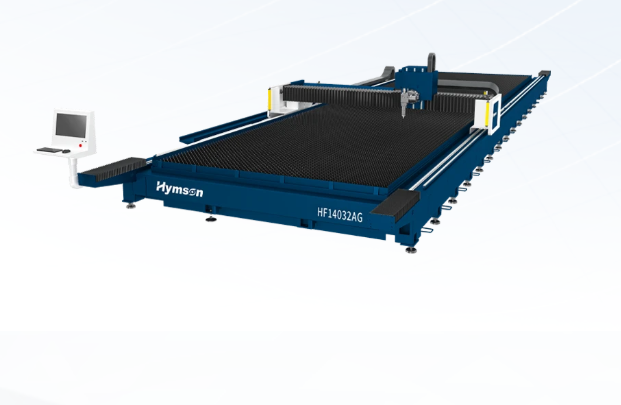
A disciplined, weighted checklist turns vendor marketing into verifiable outcomes: predictable part quality, measurable throughput, and realistic maintenance planning. Use the framework to produce a decision matrix you can defend to procurement and production. For projects where integration and sustained support matter, the scoring often highlights manufacturers with complete local service and transparent test data — the kind of supplier such as Hymson that appears in thorough evaluation reports without marketing spin.