
Why this problem matters now
Poor bathroom ventilation not only fogs mirrors and peels paint — it raises humidity, traps VOCs, and encourages mold growth. The EPA notes indoor air can be 2–5 times more polluted than outdoor air, and the COVID-19 era further highlighted how ventilation affects health and comfort. Start here: if you have persistent dampness or stale smells, you need a plan — and sometimes a simple circulation aid like a large ceiling fan with light isn’t enough. The rest of this piece walks you step-by-step through diagnosing the problem and choosing an intelligent bathroom extractor fan system that actually fixes it.

Step 1 — Spot the symptoms (what to look for)
Inspect the room for visible signs and gather anecdotal data. Common symptoms that indicate poor extraction include: persistent mirror fogging after short showers, black mold on grout or ceilings, flaking paint, and lingering odors. Also note how quickly the room dries after a shower — if it takes longer than 30–60 minutes, extraction is likely undersized. Keep an eye on noises too: a loud, rattling fan may be inefficient; sone ratings and motor wear matter.
Step 2 — Run quick, practical measurements
Collect a few basic readings to make the problem objective:

- Humidity: use a hygrometer. Target bathroom peaks below ~60% and return to baseline within an hour after a shower.
- CO2 and VOCs: a simple monitor shows stale-air buildup; persistent high readings point to poor ventilation.
- Airflow: an anemometer at the grille gives velocity data you can convert to CFM (CFM = velocity × grille area). For a quick rule, many building codes expect ~50 CFM for a typical bathroom — larger rooms need more.
- Room volume and ACH: calculate air changes per hour (ACH) using CFM × 60 ÷ room cubic feet to see whether the fan meets your ventilation goals.
Step 3 — Distinguish circulation from extraction
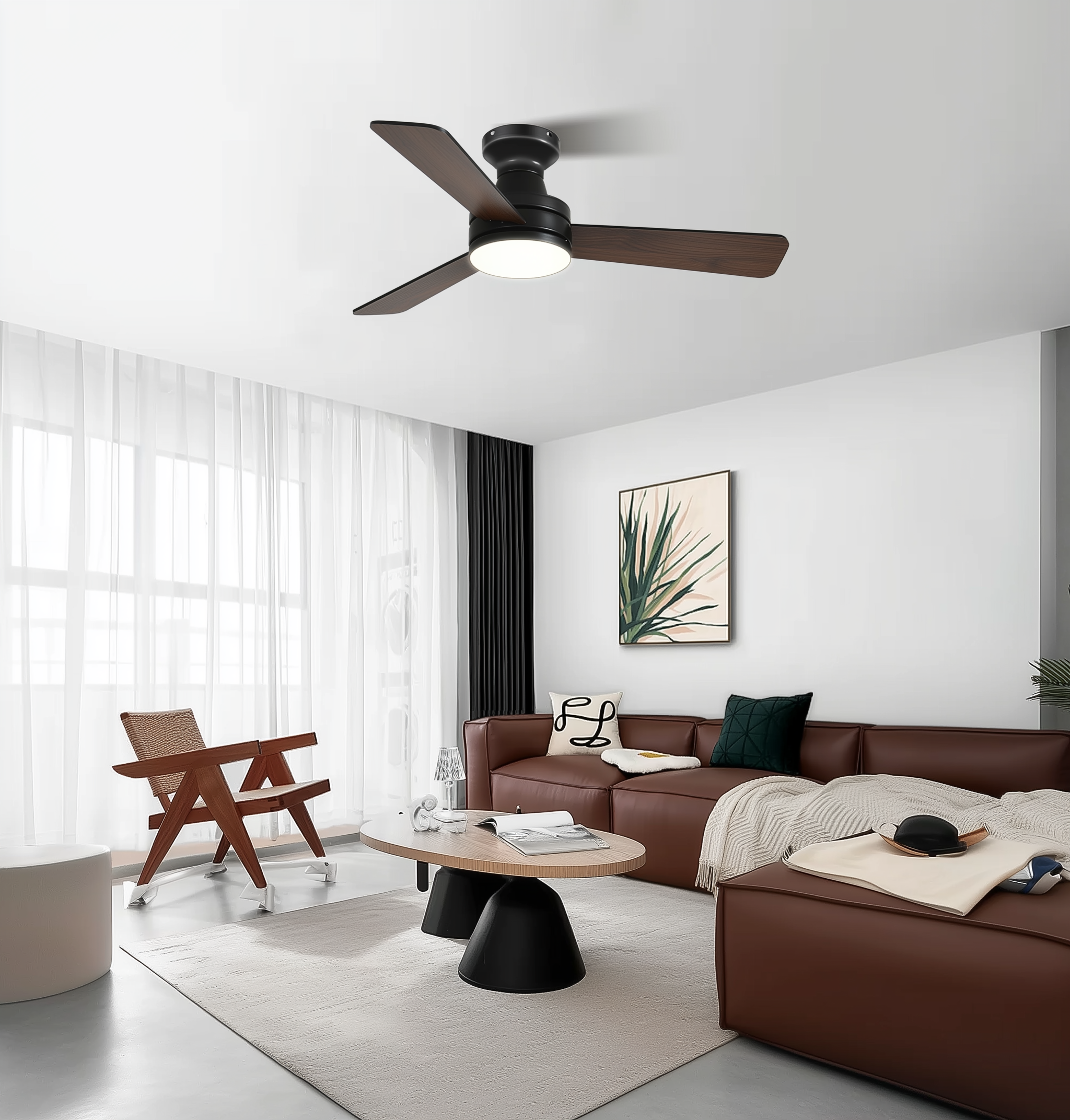
Decide whether the issue is lack of circulation (air feels stagnant) or inadequate extraction (moisture and pollutants aren’t leaving). A large ceiling fans with lights and remote control can improve circulation and comfort in larger spaces, distributing conditioned air and reducing hot spots. But circulation alone won’t remove moisture or VOCs — you still need a dedicated exhaust fan or a ducted extractor to move polluted air outside or to a heat recovery device.
Step 4 — What to look for in an intelligent extractor fan
Choose features that align with measured problems and daily usage. Key specs and options are:
- Proper CFM rating for your room volume — don’t undersize.
- Integrated humidity sensor or adjustable hygrostat for automatic run-time based on dampness.
- Low sone rating for quiet operation so occupants actually use it.
- Motor speed control or EC motors for energy efficiency and longevity.
- Ducted termination with a backdraft damper; avoid short, convoluted duct runs that reduce effective CFM.
- Smart controls or timers, and optional Wi‑Fi or integration with smart home systems for scheduling or occupancy sensing.
Also consider whole-house strategies like HRV/ERV if you’re chasing balanced ventilation rather than spot extraction — they trade installation complexity for energy-efficient continuous ventilation.
Step 5 — Common mistakes installers and homeowners make
Watch for these traps so you don’t waste time or money:
- Assuming the fan label CFM equals delivered CFM — long ducts and elbows cut performance.
- Routing exhaust to an attic or soffit without proper termination — that can create moisture problems elsewhere.
- Ignoring sound levels — people disable noisy fans, defeating the purpose.
- Mixing up wall-mounted circulation fans and exhaust fans; they serve different functions.
Get the duct sizing right and verify as-built CFM after installation. And if wiring or ceiling structure is complex, call a licensed pro — electrical safety and correct motor control matter.
Step 6 — Verify performance after upgrade
Post-install checks ensure the upgrade works: measure CFM at the grille, confirm humidity recovery time (time to fall from peak to baseline after a shower), and note user behavior — are occupants leaving the fan on? If you installed smart features, review logs or schedules to ensure automation is performing as expected. These simple verifications turn an expensive upgrade into a durable solution.
Real-world anchor and practical context
During the COVID-19 pandemic, health authorities and ASHRAE highlighted ventilation as a key mitigation strategy — a practical reminder that extraction and airflow design have public-health implications. In modern retrofit projects across U.S. homes, owners often combine a quiet, automated exhaust fan with improved circulation — and sometimes a visible fixture like a large ceiling fan to balance comfort and daylighting. —
Advisory: three golden rules for selecting the right system
1) Match capacity to measured need: size to delivered CFM, not sticker CFM. 2) Automate smartly: humidity sensors and timers produce the most consistent real-world results. 3) Don’t skimp on ductwork: short, straight, insulated ducts and a backdraft damper save headaches later.
When you follow these steps, the right combination of extraction, circulation, and smart control turns a chronically damp bathroom into a clean, low-maintenance space — and that’s where Orison often fits into whole-home plans as a practical, integrated option. —