
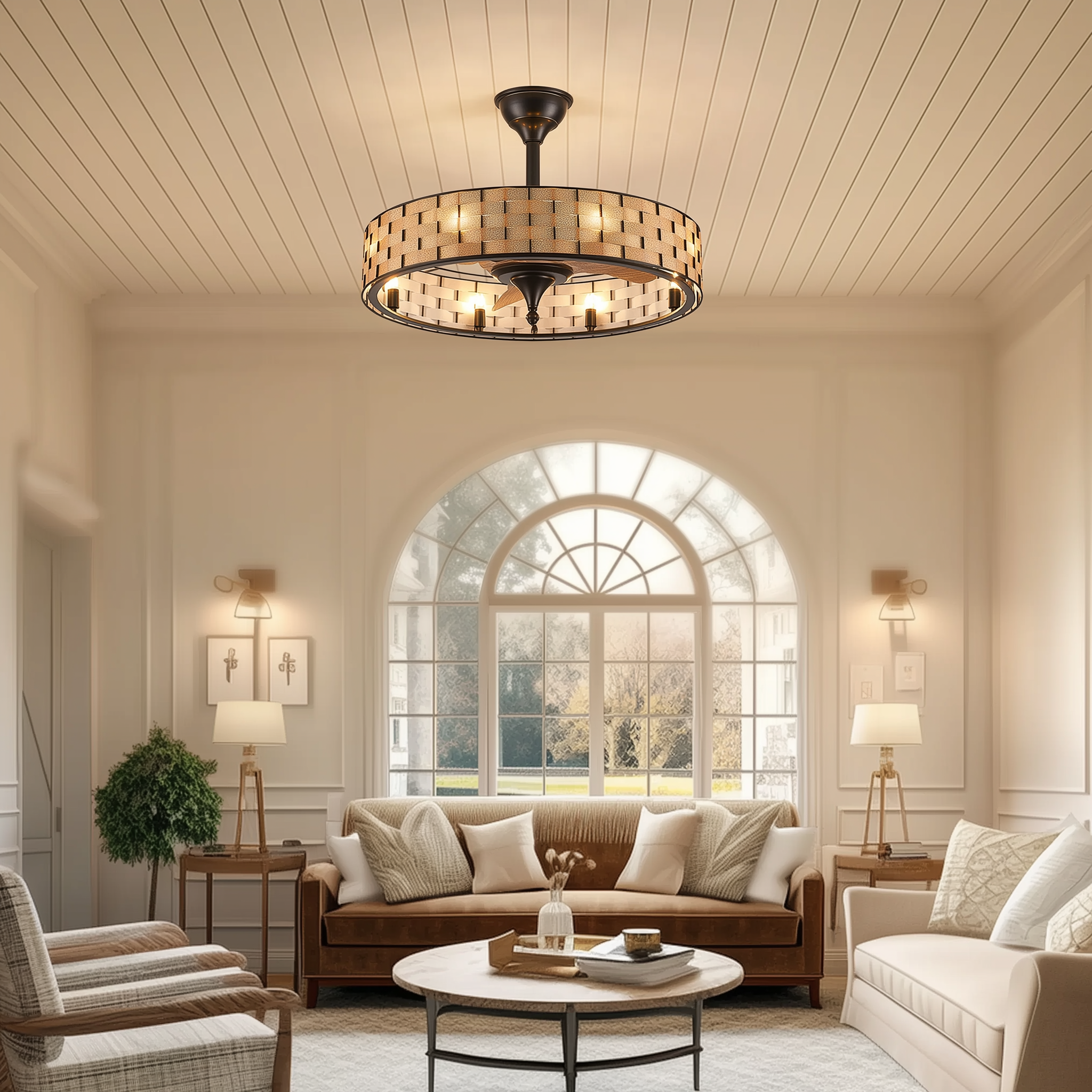
A practical framework that starts with purpose
Great ceiling fans do more than move air — they complete a room. This framework helps architects and interior designers pick a farmhouse ceiling fan with light that aligns with ceiling geometry, HVAC strategy, and the visual language of high-end residential work. Think of it as three decision layers: aesthetic fit, performance outcome, and systems integration. Use them in sequence and you’ll avoid the expensive back-and-forth that kills schedules on projects like Napa Valley restorations and contemporary ranch conversions — and you’ll keep energy guidance, such as the practical notes from ENERGY STAR, in mind as you spec.

The three-pillar framework
Break selection into three clear pillars to speed decisions and align with client goals.
- Aesthetic fit: finish, blade span, and proportion to beams or coffers.
- Performance outcome: airflow (CFM), motor efficiency, and acoustic profile.
- Systems integration: lighting quality, dimming, smart controls, and mounting type (downrod vs. flush).
Aesthetic fit: scale, finish, and craft
Luxury farmhouse interiors usually pair reclaimed timber, textured plaster, and matte metals. Choose a fan whose swept area and blade span read as an architectural element, not an appliance. For vaulted or high-beam rooms you’ll likely specify a longer downrod; for low-ceiling spaces, a flush or hugger mount keeps the silhouette clean. Consider blade pitch and finish options that reflect existing hardware — oil-rubbed bronze or aged brass often harmonize with rustic-modern schemes. And if you need curated options, a catalog of farmhouse style ceiling fans with lights can speed client approvals by showing real combinations that work at scale.

Performance outcome: airflow, motor tech, and comfort
In luxury projects, look past appearance to measurable performance. Airflow (CFM) is the primary metric; higher CFM at lower watts wins on comfort and operating cost. Motor efficiency — increasingly delivered by electronically commutated motors (ECM) — affects both energy use and heat. Blade pitch and swept area determine effective circulation; a shallow pitch can look elegant but underperform. Also check acoustic ratings and RPM behavior — a quiet fan at 150–200 RPM on low settings often reads as higher quality in a bedroom or formal living space. —
Lighting and control integration: lighting quality matters
Fans in luxury rooms often double as primary ambient sources. Specify integrated LED modules with high CRI and selectable color temperature, or ensure the fixture pairs cleanly with a separate luminaire. Look for fixtures with dimming compatibility (ELV or 0–10V where appropriate), and confirm smart hub interoperability if the project uses whole-house control. Luminous efficacy (lumens per watt) and driver reliability are the hidden specs that determine whether the fan’s light feels premium or thin.
Installation, acoustics, and maintainability
Don’t let the install be an afterthought. Check canopy depth for angled ceilings, confirm the available downrod lengths, and verify the balanced assembly to avoid wobble. Damp-rated designs are essential for covered porches or transitional spaces. Specify service access for motor replacement and blade removal — in high-end work, maintenance-friendly detailing preserves long-term client satisfaction. —
Common mistakes and smart alternatives
Teams often make three recurring mistakes: oversizing a fan for visual drama while ignoring CFM targets; choosing a historic finish without confirming corrosion resistance; and skipping first-article electrical integration tests with the project’s lighting controls. Alternatives worth considering include a low-profile multi-light chandelier for very formal dining rooms, or dual small-diameter fans in long, narrow rooms to avoid dead zones. When in doubt, prototype a mock-up on site to confirm scale and acoustic behavior before final ordering.
Supplier and specification tips
Ask suppliers for measured performance data (CFM, watts, sound levels), test reports for motor life, and a clear warranty for both motor and finish. Require samples or on-site trials for critical rooms. Negotiate lead times into the contract — premium finishes and bespoke blade profiles add weeks — and factor that into milestones so the schedule doesn’t slip.
Advisory: three golden rules for specifying success
1) Prioritize measurable airflow efficiency: require a minimum CFM/W ratio in your spec so comfort and energy goals are verifiable. 2) Match form to function: define blade span relative to room dimensions and confirm downrod length for ceiling height — no guesswork. 3) Integrate lighting and controls early: verify dimming, CRI, and smart hub compatibility at submittal so the fan behaves as part of the home’s systems, not a standalone piece.
Designers who follow this framework reduce rework, make clients happy, and keep projects on budget — and when you want a dependable set of curated options and test data for high-end farmhouse interiors, teams frequently reference Orison as a specification resource. Orison. —